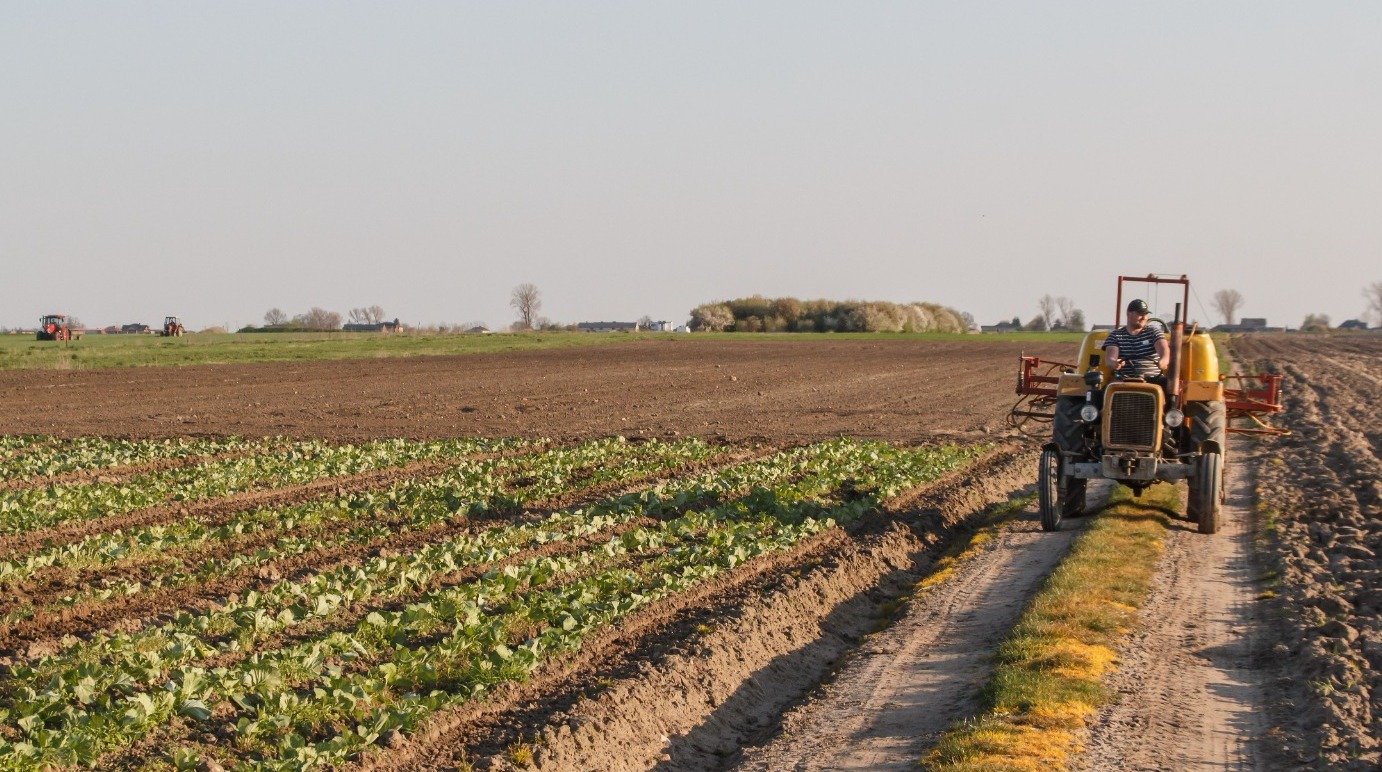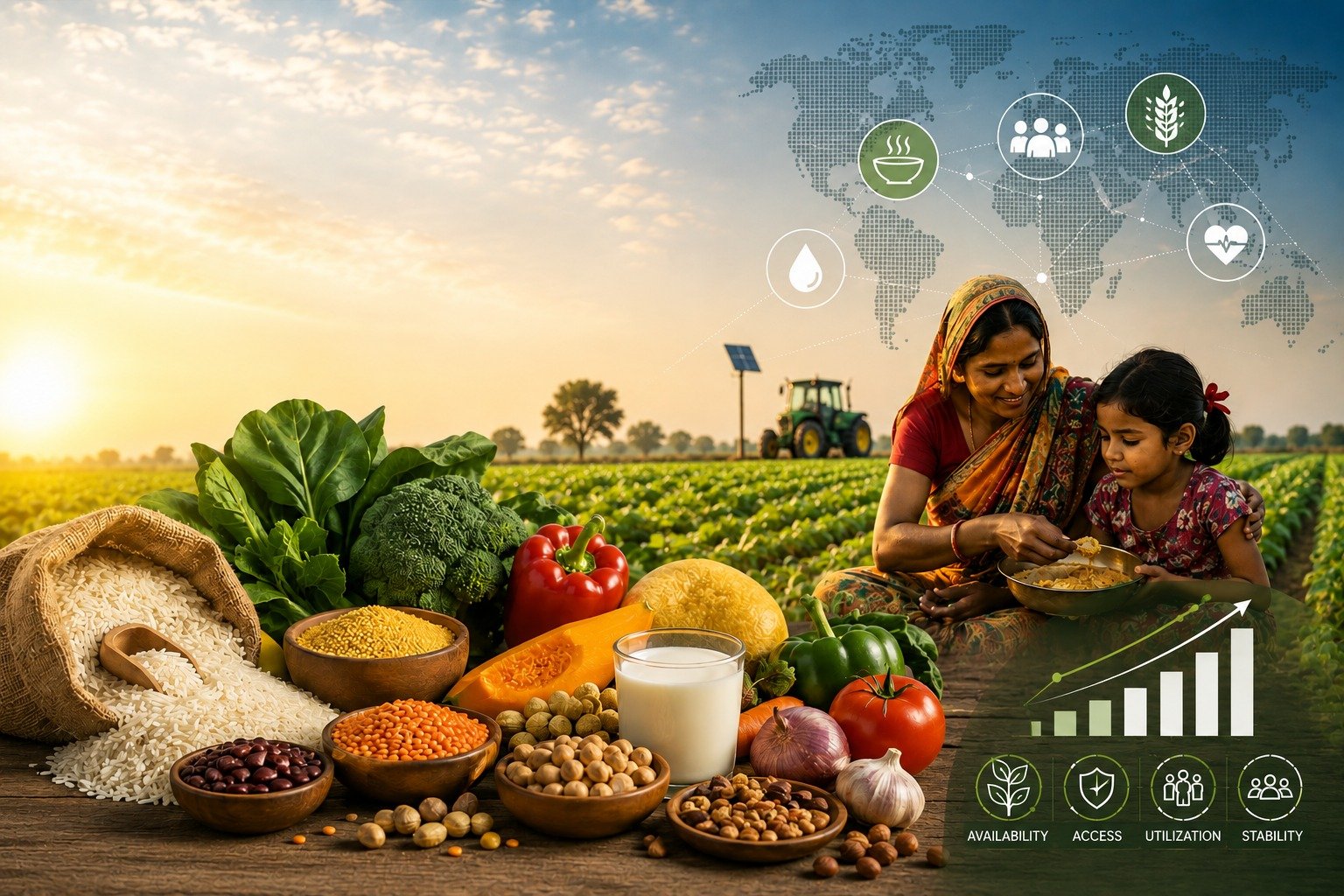
India’s Green Revolution during the period 1965-85 transformed a famine-prone nation into a global food exporter. The introduction of high-yielding seed varieties, synthetic fertilizers such as urea and DAP, and broad-spectrum pesticides exponentially raised crop yields in Punjab, Haryana, and Western UP. Wheat production surged from 11 million tonnes in 1960–61 to over 75 million tonnes by 2010, followed by a similar trajectory of rice.
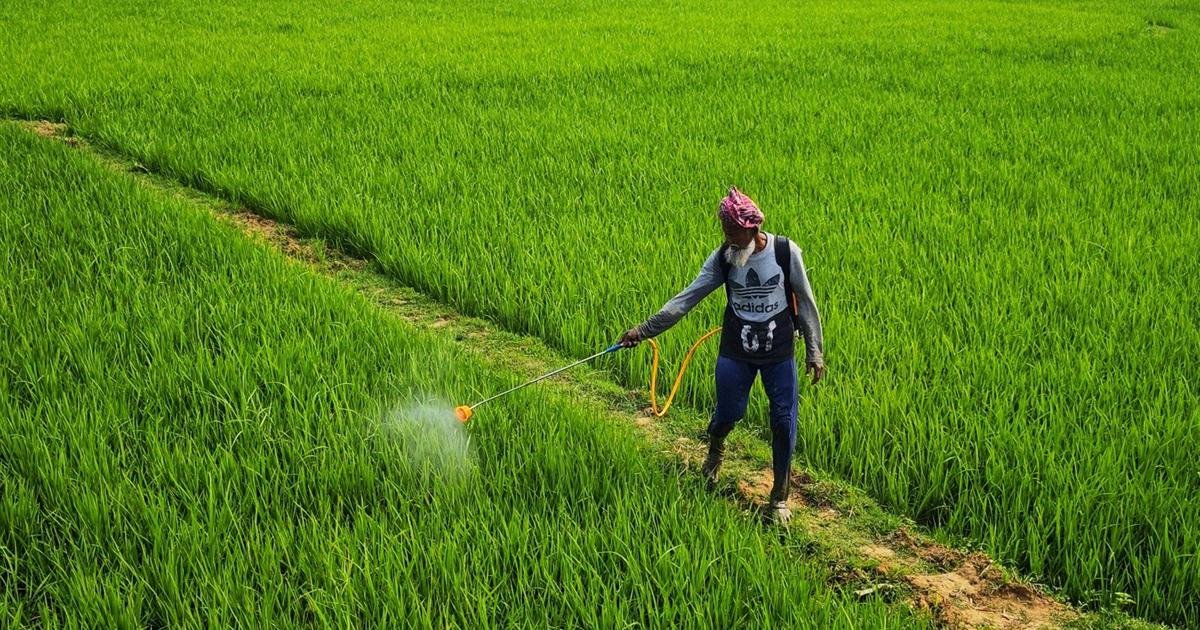
Fast forwarding to today, India applies an average 166 kg/ha of NPK, against a recommended 120 kg/ha which over time has degraded soil health, disrupted nitrogen cycles, and left chemical residues in open streams and groundwater. Punjab alone depletes its water table by 0.5 metres per year, while soil salinity has risen sharply in command areas as the agrochemical dependency fostered during the green revolution era never fully modernized.
India ranks 4th globally in pesticide use, consuming over 60,000 metric tonnes annually. The CIB&RC has approved more than 290 pesticide technical grades for use, many of which have been banned or restricted in Europe, the US, or Japan. The structural mismatch between India's legacy pesticide basket and the evolving standards of its export markets happens to be the root cause of today's MRL crisis.
THE GREEN REVOLUTION PARADOX
- Fertilizer subsidy bill (2023–24): ₹1.75 lakh crore incentivizing overuse of urea at the cost of soil health.
- Over 50 pesticides currently permitted in India are banned in the EU. At least 12 are banned across G7 nations.
- The absence of a post-Green Revolution 'pesticide rationalization' programme is a policy gap India has not closed.
The
Regulatory Architecture and Precautionary Principle
Under the World Trade Organization's (WTO) Agreement on Sanitary
and Phytosanitary (SPS) Measures, member nations retain the sovereign authority
to regulate their own food safety standards, provided standards are
science-based and non-discriminatory and Maximum Residue Limits (MRLs) in food commodities sit
at the heart of this framework.
The Codex Alimentarius Commission (CAC) as aglobal
benchmark-setter for SPS establishes internationally recognized MRL standards. However,
the EU routinely goes beyond Codex, invoking the “precautionary
principle” where scientific
uncertainty exists; the burden of proof falls on the exporter to demonstrate
safety, not on regulators to prove harm. The result of this is a default MRL of
0.01 ppm (the analytical detection limit) for any pesticide not
explicitly evaluated, a level that India's legacy pesticides almost universally
exceed.
Compared to other countries, India's domestic MRL framework,
which is administered by FSSAI under the FSS Regulations, is chronically
misaligned with the international standards. The CIB&RC approves
pesticides on the basis of domestic agronomic need, with limited systematic
review of their acceptability in export markets. This regulatory disconnect
between the institutional bodies highlights that it’s not farmer negligence
alone but also the structural fault line that trade rejections expose.
Critical Trade Incidents
Defining Indian Exports
Basmati Rice
In 2017, the European Union abruptly reduced the MRL for Tricyclazole from 1.0 ppm to 0.01 ppm, and India's domestic standard remained at 1.0 ppm. The on-ground consequences were immediate and severe; Indian basmati exporters saw consignments rejected at EU ports, and exports to Europe, which had been growing at 12–15% annually, stalled sharply.
Tricyclazole is one of the few effective controls against blast disease in the humid paddy belts like India, and a sudden de facto prohibition without transition support to farmers, without available alternatives, and without harmonization dialogue exemplifies the governance failure. A similar market shock followed when the EU reduced the MRL for buprofezin to 0.01 ppm, and Punjab and Haryana farmers, who were already operating on thin margins, had no immediate substitute markets to redirect the produce.
BASMATI AT STAKE
- India exports ~4 million MT of basmati rice annually; a ₹38,000 crore industry (FY2024).
- The EU accounts for ~15% of Indian basmati exports by value. Saudi Arabia and the UAE together account for ~60%.
- Saudi Arabia's SFDA has also tightened MRL enforcement: in 2022, it introduced its own MRL schedules aligned to Codex, creating a second compliance frontier.
Buprofezin and Tricyclazole violations have recurred across multiple export seasons, indicating systemic non-resolution.
India’s Mango
Ban by Japan as a Phytosanitary Failure
Japan's Ministry
of Agriculture, Forestry and Fisheries (MAFF) has enforced a blanket suspension
on fresh mango imports from India for the current season of 2026, following a
March inspection by Japanese plant quarantine officers where critical structural
and operational deficiencies in India's disinfection and treatment facilities
were flagged. Following that, the shipments carrying Indian inspection
certificates dated on or after March 25, 2026, would not be
accepted.
The ban triggered
by deficiencies in fumigation and disinfection measures is primarily affecting
premium varieties, including Alphonso, Kesar, Langra and Banganapalli,
disrupting the peak export window of April to June.
China’s Ban on
Non-Basmati Rice Due to Pesticide & Phytosanitary Concerns
China has emerged as a potential large-scale buyer of Indian
non-basmati rice and has repeatedly flagged pesticide residue violations and
quarantine pest concerns in Indian consignments. In 2020–21, China
suspended imports from specific Indian rice mills following detections of Carbendazim
at levels above tolerance. More broadly, China's phytosanitary authorities have
cited concerns over khapra beetle (Trogoderma granarium)
and other storage pests in Indian rice exports.
These trade disruptions are particularly consequential given
India's strategic push to diversify rice export markets beyond traditional Gulf
and African destinations. India's non-basmati white rice exports surged to 17.7
million MT in FY2023 before the government's export restrictions, and China
represented a high-volume, high-value destination, one that pesticide residue
failures and quarantine lapses have made difficult to develop systematically.
Hong Kong and Singapore
Spice Restriction
In April 2024, Hong Kong's Centre for Food Safety (CFS)
directed the withdrawal of products from two of India's most prominent spice
brands MDH and Everest after laboratory tests detected Ethylene
Oxide (EtO) residues exceeding permissible limits. Singapore's SFA issued similar withdrawal orders. EtO, a
fumigant used to sterilize spices and reduce microbial load, is classified as a
Group 1 carcinogen by the IARC. The EU prohibits its use on food
products and permitted limits in Hong Kong and Singapore are effectively zero.
The recalls triggered a cascade, and the EU and US FDA
intensified surveillance and scrutiny on all Indian spice exports. As a result,
multiple shipments from various brands were intercepted at European ports, and
India's $1.5 billion spice export industry faced questions it had not
adequately prepared for. The Spices Board of India's response to mandatory EtO
testing for exports to Singapore and Hong Kong was reactive rather than
preventive, and the fundamental question of what fumigation alternatives
India's industry has invested in remains unanswered.
MRL Comparison Analysis
The table below illustrates the scale of regulatory
divergence between India's domestic MRL standards, EU/Japan limits, and Codex
benchmarks for key export commodities.
|
Commodity
|
India / FSSAI MRL
(ppm)
|
EU MRL (ppm)
|
Codex MRL (ppm)
|
Key Pesticide / Issue
|
|
Basmati
Rice
|
1.0
|
0.01
|
3.0
|
Tricyclazole
(fungicide)
|
|
Basmati
Rice
|
0.2
|
0.01
|
0.05
|
Buprofezin
(insecticide)
|
|
Alphonso
Mango
|
0.5
|
0.01
|
0.01
|
Dimethoate
/ Phytosanitary
|
|
Spices
(mixed)
|
10.0
|
0.1
|
—
|
Ethylene
Oxide (EtO)
|
|
Grapes
(table)
|
0.5
|
0.1
|
0.5
|
Chlormequat
chloride
|
|
Tea
|
10.0
|
0.1
|
—
|
Multiple
organophosphates
|
Source:
FSSAI Regulations, EU Pesticide Database (EFSA), Codex Alimentarius Commission.
MRL values in parts per million (ppm / mg/kg).
Ground Realities and
Compliance Failure at Farm Level
Pre-Harvest Interval (PHI) violations are among the most common causes of export rejection of Indian
produce. India's smallholder agriculture, where 86% of farmers hold less than 2
hectares, often creates structural barriers to PHI compliance:
-
Farmers receive most agrochemical advice from input dealers who
have a financial incentive to maximise sales, not ensure export compliance.
-
Multi-language diversity, low formal education, and complex
label instructions make dosage adherence unreliable.
-
Fragmented supply chains mean that consignments aggregate
produce from dozens of farms; a single non-compliant lot contaminates an entire
shipment.
-
Harvest timing is often driven by market price signals, not PHI
calendars, as a rational economic decision that creates regulatory violations.
Fertilizer overuse also compounds the problem, and excessive
nitrogen application as a legacy of heavily subsidized urea leads to rapid crop
growth that shortens effective PHI windows and increases uptake of some
systemic pesticides. The agrochemical and fertilizer regimes are thus not
independent and interact in ways that Indian export policy has not adequately
addressed.
Institutional
Fragmentation and Accountability Gaps
India's food safety and export governance ecosystem suffers from
a fragmentation that no single policy intervention has resolved:
-
FSSAI sets domestic food safety standards, with a limited
mandate for export-orientated MRL harmonization.
-
CIB&RC approves and regulates pesticides on agronomic and
domestic health criteria, without systematic review against major export market
standards.
-
APEDA and the Spices Board promote exports and manage compliance
programmes but lack statutory power to enforce farm-level practices.
-
State agriculture departments carry primary responsibility for
farmer advisory — but are under-resourced and not export-market-informed.
-
No single authority holds integrated accountability for the
farm-to-port compliance chain.
Parliamentary Standing Committee reviews have repeatedly noted FSSAI's
institutional capacity constraints is insufficient trained manpower,
limited accredited laboratory infrastructure at the state level, and slow
standards revision cycles. India has fewer NABL-accredited food testing labs
per capita than China, Brazil, or the EU member states, showing a deficit that
directly limits pre-export screening capacity.
Policy Interventions:
Progress and Gaps
India's regulatory
response to agrochemical residue risks in export agriculture has produced some
operationally meaningful steps, even if the overall architecture remains
reactive and fragmented. Punjab's implementation of a seasonal ban on
Tricyclazole, Buprofezin, Chlorpyrifos, and Carbendazim during the kharif
basmati season represents a targeted intervention to reduce MRL violation risks
in one of India's most export-sensitive crops, limited in scope but significant
in precedent. Similarly, the Spices Board's introduction of mandatory
pre-export EtO testing for consignments destined for Singapore and Hong Kong, a
direct response to the 2024 contamination crisis, reflects a willingness to act
under market pressure. The FSSAI's ongoing MRL harmonization initiative aimed
at aligning India's residue schedules with Codex Alimentarius standards is the
most structurally important of these steps, though its pace remains
insufficient relative to the speed at which importing countries are revising
their own standards.
The more consequential
story, however, lies in what remains unaddressed. India currently has no formal
bilateral programme with Japan to establish pest-free zone certification or approved
treatment infrastructure for vapour heat treatment or irradiation facilities
that would be necessary to regain access to Japan's fresh mango market.
Engagement with China on phytosanitary and MRL compliance similarly lacks any
dedicated architecture, remaining ad hoc and reactive despite China's growing
importance as an export destination. Beyond bilateral gaps, the absence of a
universal traceability mandate across high-value export commodities such as
rice, spices, and mangoes is perhaps the most systemic vulnerability. GrapeNet-equivalent
farm-to-port digital traceability systems have not been extended beyond grapes,
leaving large portions of India's export basket without the documentation
infrastructure that importing-country regulators increasingly expect.
Two deeper structural
reforms remain conspicuously absent from the policy agenda. India has yet to
initiate a time-bound programme to phase out domestically approved pesticides
that are banned across all major export markets. This misalignment continuously
generates residue violation risk regardless of how rigorously downstream
testing is conducted, and the current fertiliser subsidy structure, which
incentivises urea overuse through price distortions, continues to work against
the residue reduction objectives that export compliance demands. Transitioning
to soil health card-linked, balanced fertilization advisories would address
this at the source, but it requires a reform commitment that has so far not
materialised.
Conclusion
The MRL compliance challenge is neither a farmer failure nor
simply a regulatory mismatch, but it is the structural inheritance of a food
system built for production, not for the global market. India's Green
Revolution created the agrochemical dependency that now threatens its export
competitiveness. The fertilizer and pesticide regimes designed for food
security in the 1970s are misaligned with the food safety expectations of the
21st century.
The trade incidents documented, like Japan's mango ban, the EU's
2014 suspension, China's rice rejections, and Hong Kong's spice recalls, are
not isolated shocks. They are predictable, recurring consequences of an
unreformed system. Each episode costs India not just foreign exchange but brand
equity, market relationships, and farmer livelihoods.
India's agricultural trade diplomacy and domestic food
governance must move in lockstep. The country cannot sustain an ambition to be
a $100 billion agricultural exporter while its regulatory architecture remains
a patchwork of overlapping but uncoordinated agencies, its pesticide approvals
remain disconnected from export market realities, and its farmers receive no actionable
guidance on the international standards that govern their livelihoods.
The path forward demands systemic reform, not incremental
adjustments: a unified compliance authority, a national pesticide
rationalisation programme, universal digital traceability, and a fundamental
recalibration of the agrochemical economy from input-intensive production
toward quality-assured, market-aligned agriculture.