India's stubble-burning crisis exposes a tension between agricultural policy, farmers' economic choices and environmental regulation. The rice–wheat system in north-western India has supported national food security, while its harvesting cycle and residue-management costs have created persistent environmental challenges.
Examining government interventions, regulatory enforcement and Delhi's seasonal pollution reveals a central policy question: how can India make residue management economically viable for farmers while holding institutions accountable for cleaner air? The paradox is that the system which secures India's grain supply also compresses the window in which its crop residue can be managed, so the environmental cost of that squeeze is carried by farmers and by cities downwind.
Key Takeaways
- Burning stubble is shaped by procurement-linked cropping choices, as well as a late harvest and a narrow sowing window. The issue is therefore structural, not just behavioural, so treating it only as farmer non-compliance misses most of the problem.
- Crop-residue burning can dominate smoke on particular days, but Delhi-NCR's pollution also comes from transport, industry, construction dust, and other sources.
- A subsidy is not access, and machinery schemes should be judged by whether a working machine reaches a small farmer within the sowing window, and by whether residue markets pay reliably.
The Making of a Rice Bowl: Food Security and Its Unintended Consequences
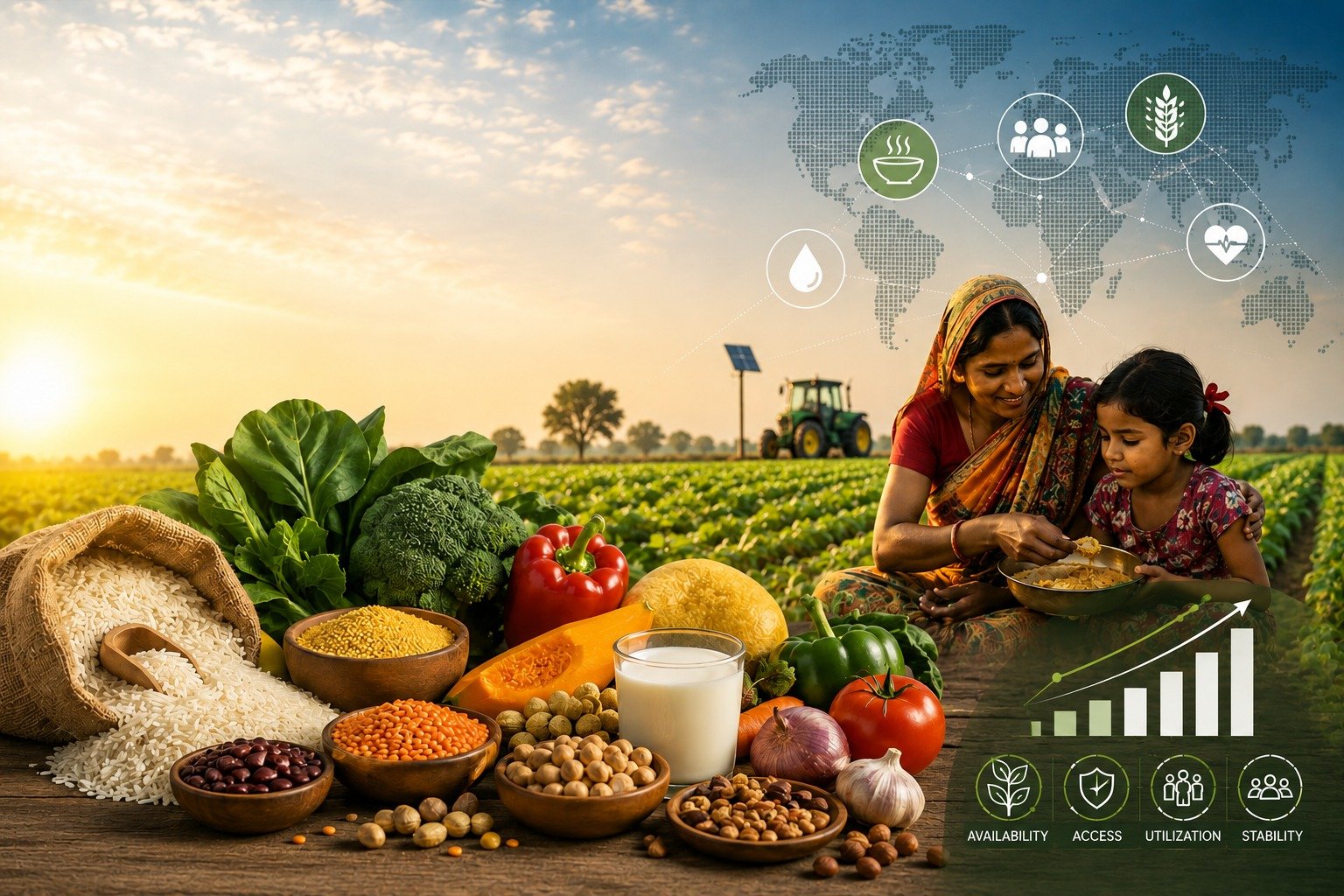
India's food-security framework was shaped by the agricultural transformation that followed the Green Revolution. High-yielding crop varieties, irrigation, fertiliser use, mechanisation and public procurement helped further expand the foodgrain production. Punjab became a major contributor to central grain reserves, while Haryana developed a similarly intensive agricultural system. The resulting rice–wheat cycle served an important national purpose: securing food supplies and supporting the public distribution system.
The policy framework also shaped the farmers' production choices. Minimum Support Prices (MSPs), procurement arrangements and established agricultural infrastructure made rice and wheat commercially significant crops in these states. The Economic Survey 2024–25 recognises the role of agricultural price policies in influencing crop choices and identifies crop diversification and efficient resource use as continuing policy priorities.
The relationship between these incentives and stubble burning is not a simple one. Procurement policy did not independently cause the practice. Rather, it helped shape a production system in which rice cultivation, mechanised harvesting and the subsequent wheat-sowing calendar interact to generate a concentrated seasonal residue-management challenge.
Downing and colleagues (Downing et al., 2022) examined Punjab's rice–wheat system from a broader economic perspective in a 2022 study published in Ecological Economics. Their analysis identified the institutional and financial arrangements that reinforce existing cropping patterns, while highlighting the difficulties involved in moving towards alternatives. Changing these patterns requires more than encouraging farmers to grow different crops; alternative choices must be supported by reliable markets, viable returns, and appropriate agricultural infrastructure.
The policy challenge is therefore structural in nature and India must protect the food-security gains associated with intensive agriculture while addressing the environmental costs of its production methods. Treating the issue solely as a matter of farmer compliance leaves the incentives and infrastructure surrounding those decisions largely untouched.
The Farmer, the Fire and the Shrinking Window
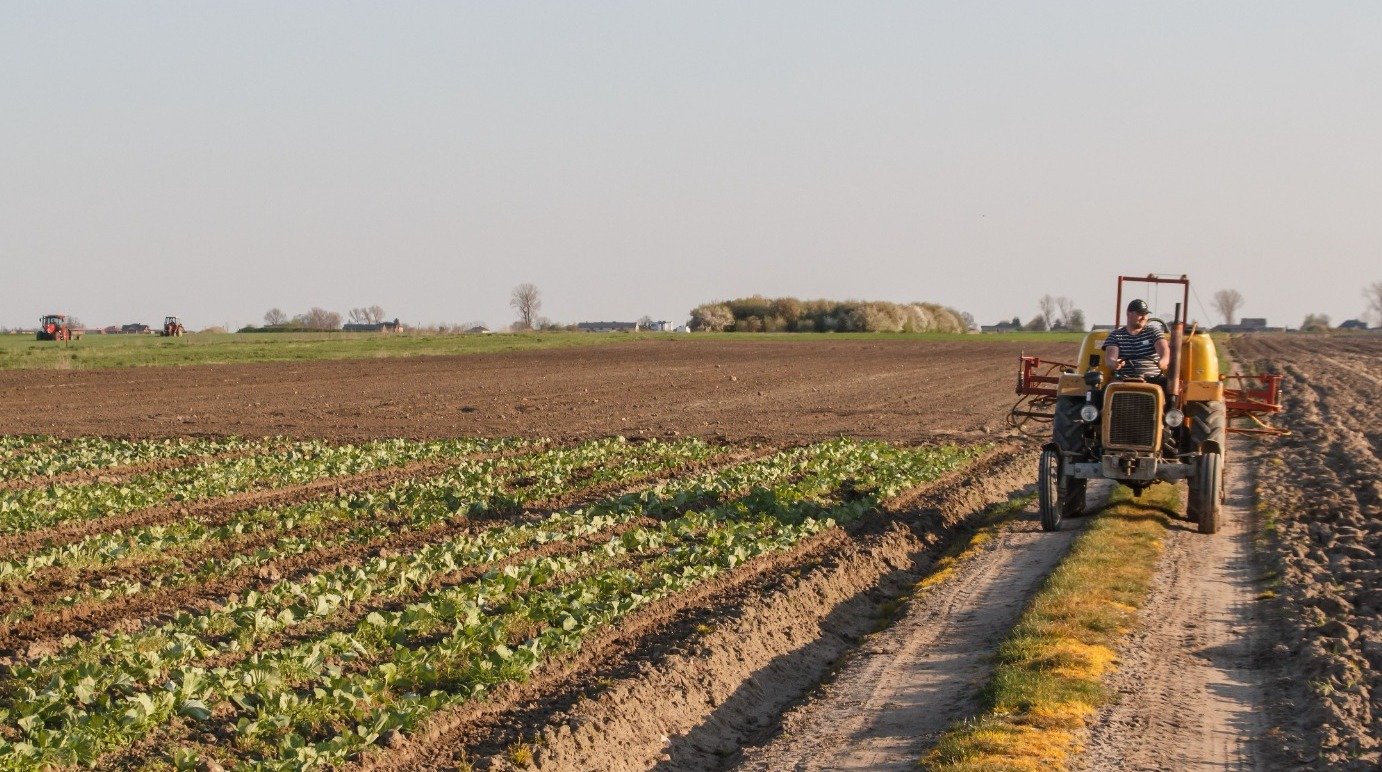
Once paddy has been harvested, the interval is short and the farmers must prepare their fields for wheat, and delays can disrupt the next crop's sowing schedule. Residue must be managed during a period when suitable machinery and labour may be in high demand.
This squeeze is partly the product of another policy. Punjab's Preservation of Subsoil Water Act, 2009 set later dates for paddy nursery sowing and transplanting so that more of the crop's water demand is met by the monsoon rather than by groundwater. The aim was sound, given Punjab's falling water table but a later transplanting date means a later harvest, which pushes residue clearance into late October and early November and shortens the gap before wheat must be sown. The permitted dates have been revised since, and Haryana has a comparable law, so the pressure on the window differs by year, variety and state; the underlying trade-off between saving water and managing residue remains.
Burning clears a field quickly and alternatives can require additional machinery, fuel, labour, collection, transport, or specialised agronomic practices. These costs are not uniform across farms. A farmer with suitable equipment faces a different calculation from one who must hire a machine during peak demand.
Published estimates of what the alternatives cost per acre vary widely and are mostly farmer-reported, but show how large the gap is between burning, which involves little direct outlay, and the alternatives.
Note: These figures differ by machine, season, distance and fuel price, and some date from 2019–2023, so they are indicative ranges and not a standardised comparison.
A 2025 study by Jadhav and colleagues (Jadhav et al., 2025) examined the potential of in-situ and ex-situ rice-residue management technologies in Punjab. Using agricultural data from 2010–11 to 2023–24, the researchers estimated that the operational window for machinery-based management could be approximately ten days, depending on the maturity of prominent rice varieties. These were modelled estimates rather than a universal deadline, but they illustrate the pressure created by the cropping calendar.
The government has responded with machinery subsidies and shared-access arrangements. Yet the distribution of machines is not the same as effective access. Equipment may be unavailable at the required time, unsuitable for local conditions, underused or non-functional. A subsidy can reduce the cost of ownership without guaranteeing that a farmer receives the service when the field needs it.
Farmers' choices are influenced by the reliability of local services, information from agricultural extension workers, neighbours' experiences and confidence in the next harvest. A new technique is more likely to gain acceptance when farmers can see it working under comparable conditions and when the financial risks of adoption are manageable.
This is why enforcement and practical support must operate together. Restrictions can establish a clear public standard, but the availability of affordable alternatives determines whether compliance is realistic across different farm sizes and local conditions.
From Agricultural Fields to Urban Skies: The Geography of Blame
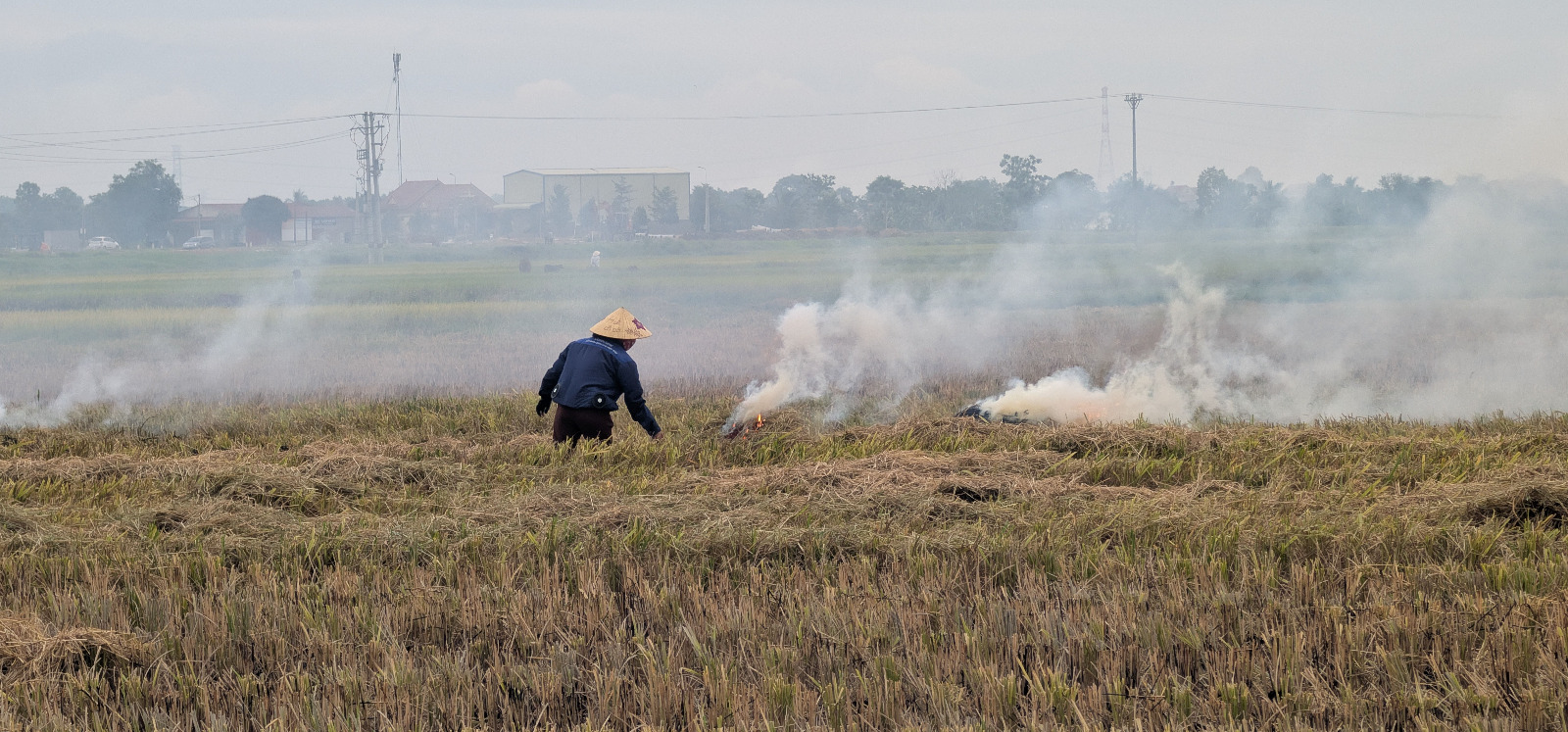
The stubble-burning debate takes on national significance when smoke from north-western agricultural regions becomes part of Delhi's seasonal air-pollution crisis. Crop-residue burning can substantially increase particulate pollution under particular atmospheric conditions, but its contribution varies by episode, location, weather and the method used to estimate emissions.
According to the Commission for Air Quality Management (CAQM), Punjab recorded 5,114 farm-fire incidents between 15 September and 30 November 2025, 53% fewer than in 2024 and 93% fewer than in 2021, while Haryana recorded 662, also 53% below 2024. The 2026 season is still in progress and has been uneven. Up to 24 October, Punjab had logged 574 satellite-detected fires, 2.3% above the same period in 2025 but about 66% below 2024. Counts then rose sharply: Punjab recorded 542 fires up to 23 October and 1,612 by 2 November, a threefold increase in ten days, which left the season total about 28.7% below the 2,262 recorded at the same point last year. Because datasets and cut-off dates differ, percentage comparisons are reliable only within a single official series, and these partial-season figures will change as the harvest ends. Late bunching of this kind is consistent with the compressed harvest-to-sowing window described above. Satellite fire counts are also a proxy rather than a direct measure of area burned or emissions, so they show the direction of change better than its exact size. CAQM also reports the share of paddy area burnt, which was 7.92% in Punjab and 6.99% in Haryana up to 28 October 2026, against 14.6% and 16.8% reported for 2025.
Tarn Taran and Amritsar together accounted for more than 72% of Punjab’s incidents in the count to 24 October, and the Punjab Pollution Control Board identified eight high-risk districts that accounted for 67% of the state’s 2025 cases. A statewide average therefore hides sharp differences between districts, which matters for where monitoring and machinery should be directed.
Kajino and colleagues' (Kajino et al., 2025) combined atmospheric modelling with surface observations to examine the effect of post-monsoon crop-residue burning in northern India in a 2025 study published in Atmospheric Chemistry and Physics. The researchers estimated a contribution of approximately 50% to surface PM₂.₅ under the specific pollution conditions investigated. This figure must not be read as the share of Delhi's pollution attributable to stubble burning throughout the winter or across the entire year.
Awasthi and colleagues' (Awasthi et al., 2024) in 2024 study of extreme pollution events in Delhi further demonstrates the importance of distinguishing between particulate matter, volatile organic compounds and secondary-pollutant formation. Different sources can play different roles in the pollution mix.
The Ministry of Environment, Forest and Climate Change has likewise described Delhi-NCR's air pollution as the combined outcome of sources including transport, industry, construction and road dust, waste burning, biomass burning and meteorological conditions. Stubble burning is identified as an episodic factor that aggravates air quality, rather than the sole cause of the region's pollution.
Farmers and agricultural authorities must address crop-residue burning, but Delhi's pollution cannot be resolved through agricultural enforcement alone. Urban transport, industrial emissions, construction dust and other local sources require their own regulatory responses.
The allocation of responsibility should follow the evidence. Farmers have obligations concerning burning; state agencies must provide workable alternatives and enforce restrictions fairly; central institutions must align agricultural and environmental policies; and urban authorities must control emissions within their jurisdictions. The crisis crosses administrative boundaries. Its response must do the same.
Fire statistics are themselves politically contested, with the Centre and the state government each citing them for credit or blame. This article therefore relies on CAQM and other official series wherever possible and treats secondary reports as indicative.
The Hidden Economics of an Environmental Crisis
Residue management is also a supply-chain problem. Collection, baling, storage, transportation and processing all cost money. The farmer's decision depends not simply on whether straw has a possible commercial use, but on whether that use provides a reliable and timely alternative to burning.
The Union government's Crop Residue Management (CRM) Scheme, implemented from 2018–19, is a central intervention. It supports both in-situ management, which retains or incorporates residue in the field, and ex-situ management, which collects straw for further use. Under the scheme, eligible farmers receive financial assistance covering 50% of the cost of crop-residue management machinery. Eligible Custom Hiring Centres (CHCs), established by rural entrepreneurs, cooperatives, Farmer Producer Organisations and other specified bodies, can receive 80% assistance under the applicable provisions.
The scheme also supports paddy-straw supply-chain projects, including machinery for collection and handling. In a separate intervention, the Central Pollution Control Board provides one-time financial support for eligible paddy-straw pelletisation and torrefaction plants. These measures seek to connect residue management with biomass energy and industrial demand.
Their effectiveness, however, depends on what happens between the subsidy and the field. Machinery must be operational and available during the harvest window. Residue collectors need sufficient demand and affordable transport. Processing plants require dependable feedstock supplies, while farmers need collection arrangements and prices that justify the additional effort.
A plant's capacity to consume straw does not guarantee that it will collect residue from every village. Nor does the existence of a subsidy establish that its benefits reach all eligible farmers equally. The gap between installed capacity and actual utilisation is therefore a central implementation question.
CAQM estimates that Punjab will generate about 18.80 million tonnes of paddy straw between 15 September and 30 November 2026 and Haryana about 7.79 million tonnes. Whether ex-situ demand can absorb volumes of this order depends on installed processing capacity and on how much straw plants actually collect, which is the comparison that matters for the capacity-versus-utilisation question above.
The economic objective should be to make residue management a reliable part of agricultural production, rather than a seasonal emergency. That means linking machinery access, local collection networks, industrial demand and farmer incentives in a single operational system.
Beyond Blame: A Policy and Behavioural Framework for Change
India already has machinery subsidies, residue-management programmes, pollution-control directions and environmental compensation rules. The next stage requires better coordination, stronger implementation and incentives designed around the conditions farmers actually face.
A. Make machinery access measurable, not merely subsidised
The CRM Scheme should be assessed through indicators that go beyond the number of machines distributed or CHCs established. States should publish district-level data on machine functionality, booking and utilisation rates, average waiting times, area covered and the proportion of small and marginal farmers served.
The Commission for Air Quality Management (CAQM) has issued directions and seasonal action plans addressing machinery availability, residue management and enforcement. These mechanisms can be used to establish clear responsibilities for district administrations and agricultural departments.
Because fires are concentrated in a few districts, data reporting and machinery deployment should start with the highest-risk districts, with the same indicators then extended statewide. A practical improvement would be a public, village-level machinery booking system linked to verified CHCs. Farmers should be able to see what equipment is available, the service price, the expected arrival time and the person responsible for the booking. If a machine fails or a booking is missed, the system should record the problem and trigger a replacement arrangement.
For small and marginal farmers, shared machinery must be genuinely affordable. States should explore targeted free or heavily subsidised access during the peak sowing window, subject to transparent eligibility rules and adequate operational funding. The objective is not simply to increase the machinery fleet. It is to ensure that existing and new machines work when they are needed.
B. Pair enforcement with a credible compliance pathway
The legal framework already permits environmental compensation for stubble burning. Under the amended rules notified in November 2024, the prescribed compensation is ₹5,000 per incident for farmers with less than two acres, ₹10,000 for those with two to five acres, and ₹30,000 for those with more than five acres. CAQM authorised designated officers to impose and collect the revised amounts.
Such penalties establish that burning has consequences. Their deterrent effect, however, depends on consistent enforcement, credible monitoring and procedural fairness. Enforcement should not become a substitute for assessing whether farmers had reasonable access to machinery and alternatives.
Early evidence from the 2026 season shows how this works in practice. By 2 November, environmental compensation of about ₹29 lakh had been imposed in 573 cases in Punjab, of which ₹19 lakh had been recovered. Prosecution proceedings had been initiated against officials in 13 cases, but no charge sheets or suspensions had been reported. The average of roughly ₹5,100 per case is close to the lowest prescribed slab, which suggests that penalties are falling mainly on small landholders, though this inference rests on a single average and needs case-level data to confirm. Equivalent data on action against officials for service failures would show whether accountability runs in both directions.
A more effective model would combine clear prohibitions with advance communication of available services, transparent fire verification and a documented process for complaints and appeals. District authorities should be accountable both for responding to verified burning incidents and for ensuring that promised machinery and collection services are actually available. Where repeated administrative failures prevent access to alternatives, those failures should be investigated rather than ignored.
This does not mean exempting farmers from environmental obligations. It means making enforcement predictable, proportionate and supported by a functioning compliance system.
C. Use behavioural incentives to make non-burning the easier choice
Information campaigns are necessary, but general warnings about pollution are unlikely to overcome the practical barriers faced during harvest. Behavioural interventions should address convenience, trust and perceived financial risk.
Agricultural extension workers and local institutions can demonstrate residue-management methods in comparable fields, provide crop-specific guidance and communicate realistic costs. Farmers who have successfully adopted these methods can share practical experiences with neighbouring cultivators. Such demonstrations should be accompanied by access to equipment, rather than ending with advice that farmers cannot act upon.
States could also test outcome-based incentives for verified non-burning, with eligibility tied to actual residue-management practices and safeguards against false reporting. Incentives should be designed so that farmers are not rewarded merely for having access to machinery, but for adopting effective practices. Any pilot should be independently evaluated for additionality, cost, fairness and unintended effects before wider expansion.
The principle is straightforward: environmental compliance becomes more durable when the desired behaviour is feasible, visible and financially credible.
D. Build a dependable market for agricultural residue
The central government already supports supply-chain projects and paddy-straw processing infrastructure. The next priority is to improve coordination between farmers, aggregators, transport operators and end users.
District-level residue plans should estimate likely straw availability, identify processing demand and map storage and transport requirements before the harvest begins. Procurement arrangements between aggregators and processing plants should specify collection windows, quality standards and payment terms. Industrial support should be linked, where feasible, to verified utilisation of residue rather than installed capacity alone.
Biomass energy is one possible outlet, but it is not the only one. Depending on local demand and technical feasibility, residue may also be used in other industrial applications, composting or suitable agricultural uses. A diversified market reduces dependence on any single buyer and helps manage seasonal surpluses.
The commercial case must remain realistic. Residue cannot be assumed to be profitable everywhere, and subsidies cannot indefinitely compensate for a poorly functioning supply chain. Public support should focus on addressing infrastructure gaps and coordinating markets while measuring whether the resulting system is financially and environmentally sustainable.
E. Align food security with crop diversification
The longer-term response must address the agricultural incentives that sustain concentrated rice cultivation. Crop diversification can reduce pressure on the rice–wheat system, but farmers need viable alternatives before they can be expected to change established practices.
Government policy should strengthen market access, extension services and risk management for alternative crops suited to local conditions. Procurement and price policies should be evaluated for how they influence farmers' crop choices, while protecting national food-security requirements. A transition should be gradual and evidence-based, not an abrupt withdrawal of support that transfers the costs of reform to farmers.
Central ministries, state governments, agricultural universities and industry must coordinate these measures. Environmental targets will remain difficult to meet if agricultural policy continues to reward one set of outcomes while pollution-control policy demands another.
F. Evaluate outcomes across rural and urban systems
The final measure of success should be environmental and economic performance, not the number of schemes announced. Governments should report comparable data on verified burning events, residue managed through different methods, machinery utilisation, supply-chain volumes and farmer participation. Air-quality assessments should distinguish crop-residue burning from other sources and identify the conditions under which its contribution is substantial.
Delhi's own pollution-control measures must be evaluated alongside agricultural interventions. Cleaner transport, industrial compliance, dust control and waste management remain necessary even if crop-residue burning declines. Otherwise, progress in the fields may not translate into a comparable improvement in urban air quality.
Summary of recommended measures A–F
A Systemic Problem, Not a Seasonal Mystery
Parali burning is visible in agricultural fields, but the conditions surrounding it extend far beyond an individual decision. India's food-security priorities, the economics of the rice–wheat system, the narrow harvesting window, uneven access to machinery and the development of residue markets all influence farmers' choices.
The policy response is already more extensive than a seasonal ban. Machinery subsidies, Custom Hiring Centres, biomass supply-chain support, pollution-control directions and environmental compensation rules form part of the existing framework. The central question is whether these instruments operate together effectively at the field level.
A stronger response would make non-burning practical, enforceable and economically credible. That requires machinery that works on time, residue markets that pay reliably, penalties applied fairly, and crop-diversification policies that give farmers viable alternatives. It also requires Delhi and the wider National Capital Region to address their own sources of pollution.
The goal should not be to choose between food security, farmers' livelihoods and clean air. It should be to design agricultural and environmental policy so that progress towards one does not repeatedly undermine the others.