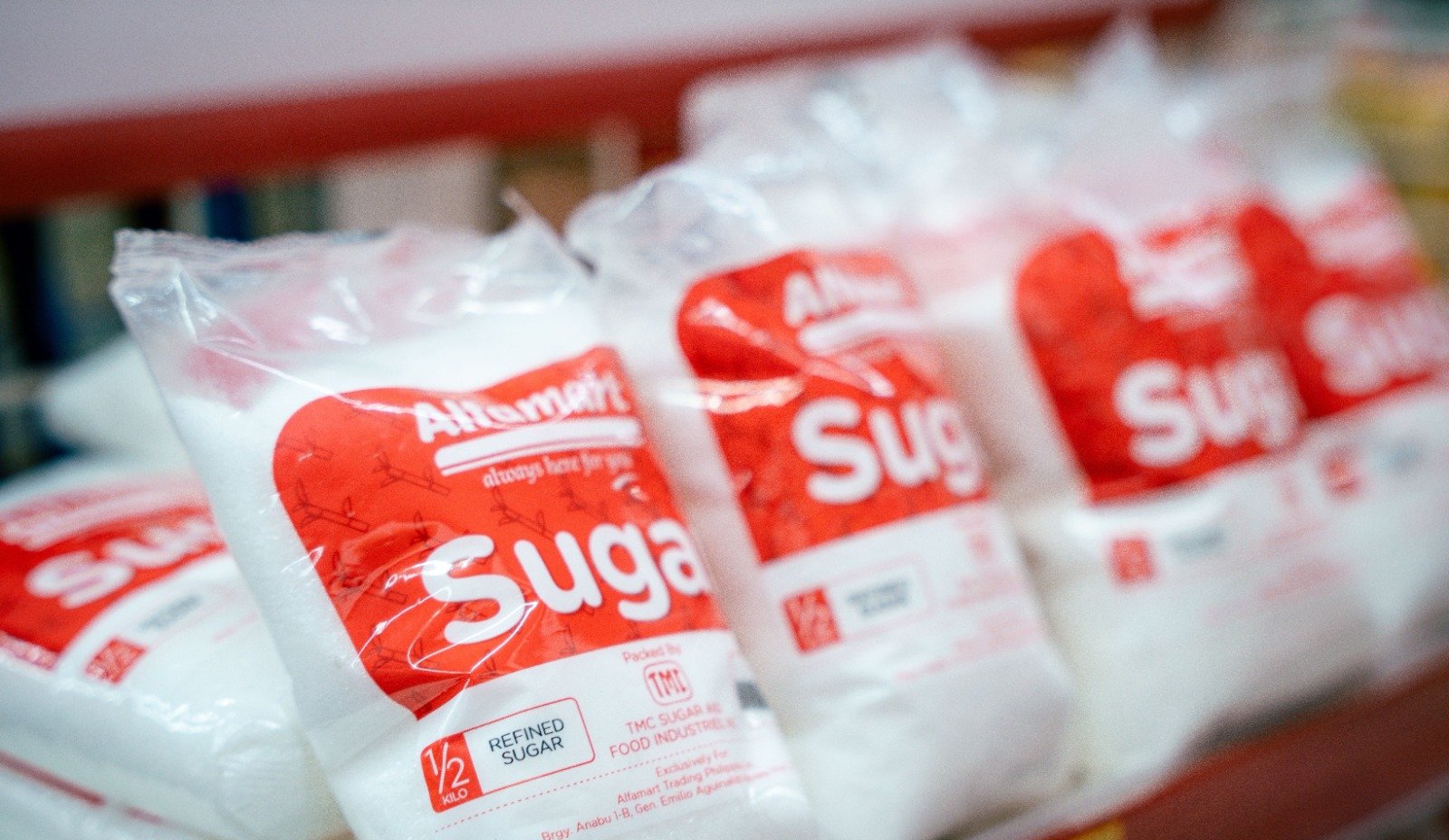
India has now moved from managing sugar through export restrictions and domestic stock controls to opening the import side of the market. The Directorate General of Foreign Trade (DGFT), exercising its power conferred by Section 3 FT (D&R) Act, 1992, through a notification on 20th August, permitted 10 lakh tonnes (1 million tonnes) of raw sugar to be imported duty-free under the Tariff Rate Quota (TRQ) system until 31 October 2026, marking the first such large-scale raw sugar import in nearly a decade.
The decision comes as domestic sugar prices have risen sharply, opening stocks for the 2026–27 season are expected to be significantly tighter than a year earlier, and the festive demand cycle is approaching. The government has simultaneously tightened inventory limits for bulk consumers and required greater stock disclosure from market participants.
This is therefore more than a routine import concession. It is a pre-emptive market intervention designed to rebuild near-term availability, temper price expectations and prevent a temporary supply squeeze from becoming a broader food-inflation problem.
Sugar Import Notification at a Glance
|
Parameter |
Government measure |
Market significance |
|
Raw sugar import quota |
10 lakh MT |
Adds up to 1 million tonnes of raw sugar to domestic availability |
|
Import duty |
Nil under TRQ |
Makes imported raw sugar more competitive in the domestic market |
|
Import validity |
Until 31 October 2026 |
Targets the period of tight availability and strong festive demand |
|
TRQ application window |
21-28 August 2026 |
Eligible mills and refiners can apply through DGFT's online system |
|
Import priority |
Early-arrival commitments |
Applicants undertaking faster imports receive priority in allocation |
|
Processing requirement |
Own operational refining facility |
Raw sugar must be processed into refined/white sugar domestically |
|
Bulk-consumer inventory |
15 days' consumption |
Applies to entities consuming more than 10 tonnes a month |
|
Bulk-consumer restriction period |
1 September–30 November 2026 |
Limits precautionary stock accumulation during the festive season |
|
Average retail sugar price |
₹70/kg |
Around 40% above the level earlier this year |
|
Ex-mill sugar price |
₹5,700-6,000/quintal |
Substantially above roughly ₹3,900/qtl/yr |
Why is India Importing Sugar Again?
India is structurally a major sugar producing nation, but the country's comfortable supply position has narrowed in the last couple of years. The immediate concern is not that domestic sugar has disappeared from the market; rather, the inventory cushion available to absorb a production shortfall and a seasonal demand surge has weakened.
Opening stocks for the October 2026 sugar season are being projected at roughly 35-40 lakh tonnes, compared with about 50 lakh tonnes at the beginning of October 2025. Production in the current season has also been weak, with output estimated at around 296 lakh tonnes, the lowest level since the 2019-20 season.
That combination matters because in India, sugar demand does not remain evenly distributed throughout the year. Consumption strengthens around the festive period, when households, sweet manufacturers, confectionery producers, beverage companies and food processors increase procurement. Considering the same, the government's calculation is consequently straightforward: bring additional sugar into the country before demand peaks rather than wait for domestic inventories to become critically tight.
From Export Curbs to a Fresh Import Window: The 2023–2026 Swing
The "export restrictions" referenced above are not current. India restricted sugar exports from October 2023, extending the curb indefinitely as a poor monsoon squeezed cane output in Maharashtra and Karnataka. That restriction held for roughly 15 months.
The government reopened the export door as conditions eased: a 10-lakh-tonne export quota was permitted for the 2024-25 season, and, more strikingly, a larger 15-lakh-tonne quota was approved for the 2025-26 season that began this past October, on the back of a projected closing stock of nearly 74.5 lakh tonnes. In other words, India was actively selling sugar abroad again as recently as October 2025.
That picture reversed again within months, as DGFT Notification No. 16/2026-27 on 13 May 2026 escalated raw, white and refined sugar exports from Restricted to Prohibited with immediate effect, running until 30 September 2026 or further notice, whichever came first, with narrow carve-outs only for EU/US TRQ commitments, Advance Authorisation exports and consignments already in the shipping pipeline. Unlike the 2023 restriction, the notification carried no grace window for exporters and no automatic reversion to free trade once the ban lapses; Para 6 of the notification specifies that the default status reverts to Restricted, not Restricted-or-better, a deliberate signal that India was not treating the curb as temporary (see The Insight Ledger's earlier coverage of the notification).
That makes the reversal captured in this piece considerably sharper than a simple continuation of export curbs: within about three months of that ban taking effect, the government pivoted from prohibiting exports outright to opening a duty-free import window. The swing says less about any single bad harvest and more about how quickly India’s sugar balance can move once tightening opening stocks, weak production and rising ethanol diversion compound in the same season, a volatility that trade partners and policymakers alike will need to price into their planning rather than treat as a one-off.
The Price Signal Is More Important Than the Import Volume
The 10-lakh-tonne allocation is significant in physical terms, but its immediate importance lies in the signal it sends to the market. The average retail sugar price has reached ₹70 per kg in retail markets of several major cities as of 24 August, about 40% above the earlier level this year. Ex-mill prices have also risen sharply, with market reports putting the all-India range around ₹5,700-6,000 per quintal, compared with roughly ₹3,900 a year earlier.
In a commodity market, expectations can amplify a supply problem. When processors and traders anticipate tighter availability, they may increase precautionary purchases. That additional buying can reduce spot availability further, creating a feedback loop between expectations, inventories and prices. The import decision attempts to break that loop by making imported raw sugar available at zero duty within a defined quota; the government is effectively putting a credible ceiling on how far domestic scarcity can be allowed to push prices during the transition into the new sugar season.
Import Rules Are Designed for Speed, Not Open-Ended Trade
The measure should not be interpreted as a return to unrestricted sugar imports. The government has created a tightly defined TRQ window. Applications are being accepted between 21 and 28 August 2026, with eligibility focused on sugar millers and refiners possessing their own functional facilities for converting raw sugar into white or refined sugar. Applicants must disclose their refining capacity and provide supporting documentation.
Under the prescribed mechanism, the imported raw sugar must also be processed domestically, with 1.05 kg of imported raw sugar required to yield and be sold as 1 kg of refined sugar in the domestic market by 31 October 2026. The framework therefore links the import concession directly to additional domestic availability rather than allowing the quota to become a purely trading opportunity.
DGFT has also provided a one-time route for eligible Advance Authorisation holders to convert qualifying existing authorisations into the TRQ framework, subject to prescribed conditions. The architecture is deliberate; the government is not simply opening the border; it is attempting to ensure that the imported raw material is converted into sugar and reaches Indian consumers within the period of greatest market pressure.
Stock Limits Add a Second Layer of Intervention
Imports are only one part of the government's response. The Centre has also moved to restrict inventory accumulation by large users of sugar. From 1 September to 30 November 2026, bulk consumers using more than 10 tonnes of sugar per month will be limited to 15 days' consumption in inventory. A consumer using 12 tonnes a month, for example, would be able to hold approximately six tonnes at any point under a 15-day limit. Dealers have separately been subjected to stock restrictions and weekly stock declarations. The objective is to distinguish genuine physical tightness from a shortage intensified by speculative or precautionary inventory building. The two interventions therefore operate on opposite sides of the market: imports expand supply, while stock controls restrain artificial demand for inventories.
Is India Actually Facing a Sugar Shortage?
This is where the government's intervention needs to be interpreted carefully. The sugar industry has mentioned that India does not face an immediate physical shortage and that mill stocks are adequate to meet domestic demand until November–December, when fresh sugar from the new season is expected to reach the market. The import decision is therefore better understood as preventive supply management rather than emergency shortage management. That distinction matters for policy. An actual structural deficit would require a much larger and potentially sustained import programme. A temporary inventory squeeze, by contrast, can be addressed through a targeted import window designed to bridge the period between the end of one crop and the arrival of meaningful production from the next.
The Production Outlook
The next production cycle is not expected to offer much relief as the industry estimates 2026-27 gross sugar production at around 306 lakh tonnes, compared to the initial estimate of around 343 LMT by sugarcane-growing states. If the domestic production recovery does not materialise, then the supply chain can only be balanced either by importing or by putting export restrictions in place. But the outlook remains dependent on cane availability, yields, sugar recovery rates, weather conditions and the allocation of sugarcane between sugar and ethanol.
This is particularly relevant because ethanol policy has become an increasingly important variable in India's sugar balance. The quantity of sugar-equivalent output diverted towards ethanol can materially influence the amount available for food use. Consequently, future sugar policy will increasingly require coordination between food security, biofuel policy and farm-sector economics.
The Ethanol Variable
The ethanol figure is not incidental to this story; it is close to the size of the entire import window. Industry estimates for the 2025-26 sugar season put roughly 34 lakh tonnes of sugar-equivalent output diverted to ethanol production, against net sugar production of around 309.5 lakh tonnes and domestic consumption of about 285 lakh tonnes, according to industry estimates cited by the trade press. That diversion is now large enough to move the supply balance on its own: a modest shift in how much cane goes to ethanol rather than sugar can widen or narrow the gap this TRQ window is meant to bridge.
Government policy on ethanol blending has, in recent seasons, actively encouraged mills to divert more cane and molasses towards fuel rather than food-grade sugar, as part of the national ethanol-blending programme. That push cuts in the opposite direction to the sugar import decision: one arm of policy is pulling raw material out of the sugar stream, while another is bringing raw sugar in from abroad to plug the resulting gap. The two are not contradictory so much as unresolved; India has not yet settled how much of its cane crop should be treated as an energy feedstock rather than a food commodity, and each season the answer is decided closer to real time than a stable formula would allow.
For the 2026-27 season, the 343-lakh-tonne production estimate already assumes a specific level of ethanol diversion; if the government pushes blending targets higher over the coming year, that production cushion narrows even if cane output itself is unchanged. Any assessment of whether India needs sugar imports again next season has to model the ethanol allocation explicitly, rather than treating it as a fixed background assumption.
Global Market Impact: India Becomes a Buyer Again
The domestic policy shift has implications beyond India. The country is normally a major participant on the export side of the global sugar market. A move from restricting exports to importing raw sugar changes the market's perception of India's near-term balance.
Global sugar benchmarks responded sharply to the announcement, with reports indicating that London white sugar and New York raw sugar futures rose by around 4% after the import decision. The immediate reaction reflects the significance of India entering the international market as a buyer at a time when global participants are already monitoring supply conditions across major origins.
For major exporters such as Brazil, the world's dominant sugar exporter, the Indian import window creates an additional demand channel. Brazil is likely to remain the most important potential origin because of its export scale and ability to supply raw sugar for refining. However, freight economics, vessel availability, refinery capacity and shipment timing will determine how much of the quota can actually be delivered before the October deadline.
For global traders, the critical question is therefore not simply whether India has authorised 1 million tonnes. It is how quickly that volume can be contracted, shipped, refined and released into the domestic market.
What It Means for Indian Sugar Mills and Farmers
The policy creates a mixed incentive structure for the domestic sugar industry. For mills and refiners, cheaper imported raw sugar can put downward pressure on domestic prices and reduce the extraordinary margins created by the recent price spike. This may be negative for mills in the short term, particularly those carrying relatively expensive cane costs or lower inventories.
For consumers and food-processing industries, however, additional availability should reduce procurement pressure and potentially moderate input costs. Bakeries, confectionery manufacturers, beverage companies and sweet manufacturers are particularly exposed to sharp movements in sugar prices.
For cane farmers, the policy question is more complicated. Sustained imports can weaken domestic sugar realisations if they continue after domestic production recovers. The government therefore faces a delicate balancing act: protect consumers from excessive prices without undermining the economics of the sugarcane sector.
Policy Outlook
The government's latest intervention marks a significant change in the management of India's sugar balance. Rather than relying exclusively on export restrictions and domestic inventory controls, policymakers are now using imports to create an additional supply buffer.
The success of the measure will depend on execution. If quota allocations translate quickly into physical imports, the policy could cool domestic prices before the festive demand peak and provide a bridge until new-season production strengthens. If shipments are delayed, the headline volume may have less immediate effect on domestic prices.
The larger policy lesson is equally important. India's sugar market is increasingly being shaped by the interaction of food demand, ethanol diversion, weather variability, trade policy and inventory management. A market that was once managed largely through export quotas and production cycles is now becoming a more complex food-and-energy policy system.
Cover Picture Credit: Pexels