The OECD-FAO Agricultural Outlook 2026-2035 projects higher average farm incomes, broadly stable real commodity prices, and continued growth in food demand, but it also highlights persistent inequality, rising agricultural emissions, and the disproportionate vulnerability of low-income countries to energy and fertiliser shocks.
Every year, two of the world's leading institutions on farming and food, the Organisation for Economic Co-operation and Development (OECD) and the Food and Agriculture Organisation of the United Nations (FAO), come together to answer a simple but important question: what will the world eat, grow, and trade over the next ten years? Their latest report, the OECD-FAO Agricultural Outlook 2026-2035, now in its 22nd edition, looks ahead at global food and farm markets from 2026 to 2035, covering everything from cereals and sugar to meat, dairy, fish, biofuels and cotton, using a shared economic model called Aglink-Cosimo to keep projections for every country and commodity consistent with one another.
This edition lands at a particularly volatile moment for the global economy. Its baseline projections use data up to the end of 2025, but the outbreak of conflict in the Middle East in early 2026 has already begun disrupting energy and fertiliser markets. Rather than ignoring this, the report built a special 'what if' scenario to test how vulnerable global food systems are to exactly this kind of shock. This article breaks down the report's biggest findings in simple terms, covering farmer incomes, food prices, the environment, changing diets, and global trade.
Farmer Incomes: Rising, but Deeply Unequal
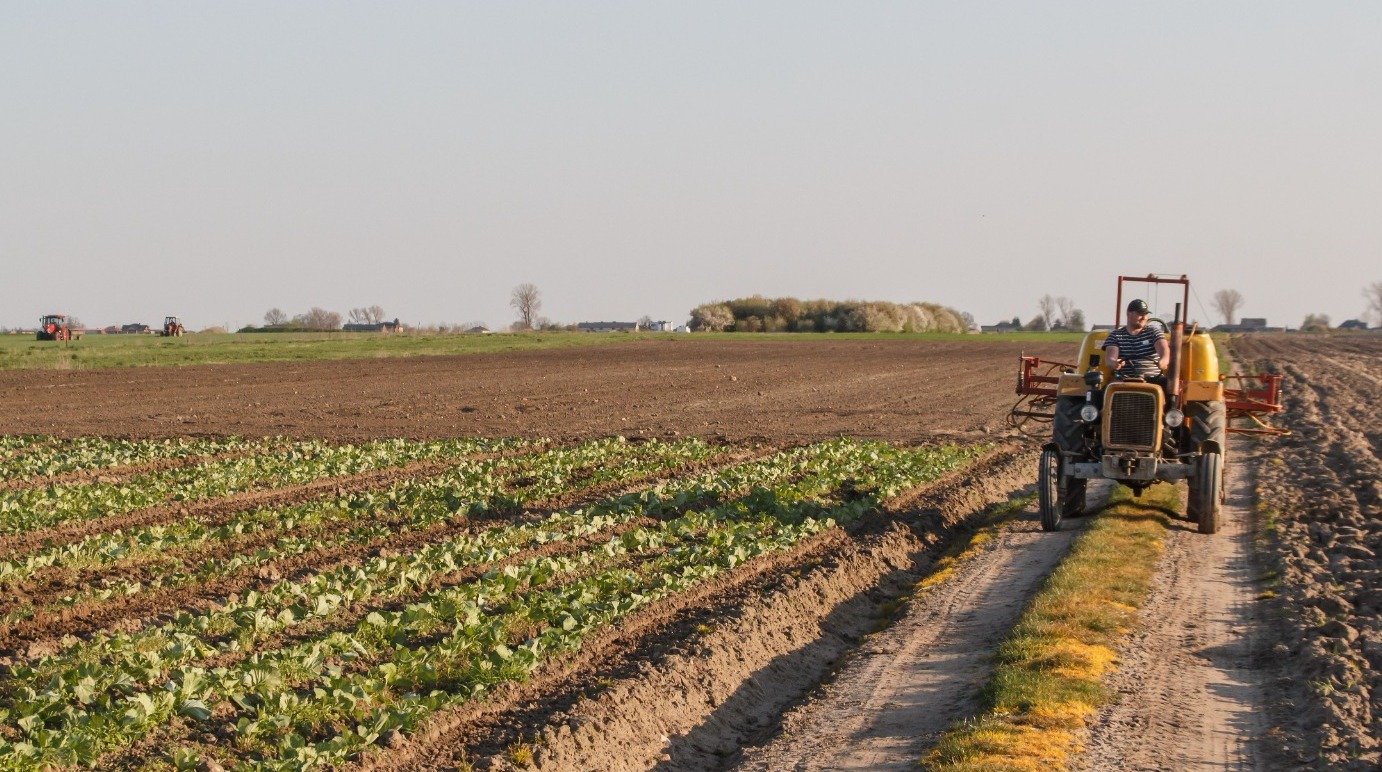
The good news first: Thanks to gains in productivity, farmers around the world are expected to earn more. The average gross income per farm worker is projected to rise by about 9% over the next decade, even though the cost of farm inputs like fertiliser and fuel keeps climbing and food prices stay roughly flat.
But this 9% figure hides a much bigger story: the gap between rich and poor farmers is enormous, and it is not closing quickly. The table below shows just how wide this gap really is.
|
Income group |
Avg. income per farm worker 2023-25 (USD/year) |
Projected 2035 (USD/year) |
|
High-income countries (e.g. North America, Western Europe, Oceania) |
~21,100 |
~22,155 |
|
Low-income countries (Sub-Saharan Africa, South Asia) |
~930 |
~1,100 |
|
Global average |
— |
~3,800 |
Table 1: Average agricultural income per worker, by income group (Source: OECD-FAO Agricultural Outlook 2026-2035)
A farm worker in a high-income country like the United States, Germany or Australia already earns over 20 times more than a farm worker in a low-income country in Sub-Saharan Africa or South Asia and by 2035, that gap barely seems to be narrowing. Large, mechanised farms in wealthy nations keep pulling ahead, though this scale also brings its own risks: heavy machinery and financial commitments make these farms more exposed to swings in agricultural revenue. Small-scale farmers in poorer regions, meanwhile, remain stuck with limited machinery, poor market access, and a heavy reliance on a handful of staple crops or extensive livestock. The report calls for urgent investment in productivity and alternative rural jobs to help these communities escape poverty.
Sitting in between these two extremes is a large group of middle-income countries across Latin America, Eastern Europe, and East and Central Asia. These economies are described as being in transition, moving away from labour-intensive farming toward more commercial, capital-intensive operations. Over the next decade, rising mechanisation there is expected to improve land use and make planting and harvesting more efficient, while also freeing up workers to move into off-farm jobs. The report cautions that these gains are not automatic: they depend on good governance, fewer market distortions, and better access to inputs, infrastructure and marketing.
There is also a hidden risk behind the optimistic 9% average. Farming income is naturally unstable, swinging up and down with weather, pests, and market shocks. Accounting for this normal volatility, there is roughly a one-in-four chance that global farm income in 2035 could actually end up 12% lower than expected, and in low-income countries, that potential drop could exceed 20%.
Prices are Expected to Stay Stable but Fragile
For consumers, there is reassuring news as real international prices for major farm commodities are projected to stay broadly stable, at or below today's levels, over the next ten years. This is largely because ongoing productivity improvements are expected to keep pace with the world's growing appetite, keeping the cost of producing food from spiralling upward.
However, ‘stable on average’ does not mean ‘shock-proof’. History has shown us that energy crises, market crashes, pandemics and wars have repeatedly interrupted long-term price trends, and the report warns that today's world is no exception, pointing directly to the conflict that broke out in the Middle East in early 2026 as a fresh source of uncertainty (more on this below). It is also worth remembering that this projected stability continues a much longer pattern: real global food prices have been on a gradual downward path for decades, largely because investment in productivity has consistently allowed farmers to grow more food without proportionally raising costs. The Outlook is clear that this pattern only holds if those productivity investments keep flowing; without them, prices would face much greater upward pressure.
More Food Means More Emissions
Over the next decade, most of the projected growth in farm output will come from producing more per hectare and per animal, and not from using more land. Even so, some expansion of cropland and livestock herds will still be necessary to feed a growing, more prosperous population. As a result, direct greenhouse gas emissions from farming are projected to rise by 6.5% by 2035.
Chart 1: Sources of the projected rise in farming emissions
Almost all of this increase comes from just two sources: growing livestock herds, which drive higher methane output, and greater use of synthetic fertiliser, which in turn raises nitrous oxide emissions. The report frames this as a policy challenge rather than an inevitability: if countries can close technology gaps and speed up sustainable productivity growth, emissions could grow more slowly, or even fall, while still meeting the world's food and nutrition needs. In other words, the same productivity improvements that are expected to lift farmer incomes and keep prices stable are also the main lever available for slowing the growth in farming's climate footprint, making investment in efficient, low-emission farming techniques a priority on both economic and environmental grounds.
Changing Diets Around the World
As incomes increase, eating habits shift. This has been observed in high-income countries, and this Outlook expects that trend to continue strongly in lower middle-income countries. People there are projected to steadily diversify their diets, eating more meat, dairy and fish as living standards improve. Southeast Asia stands out in particular, expected to account for nearly 39% of all growth in global food consumption by 2035, driven by a mix of population growth, urbanisation and rising incomes.
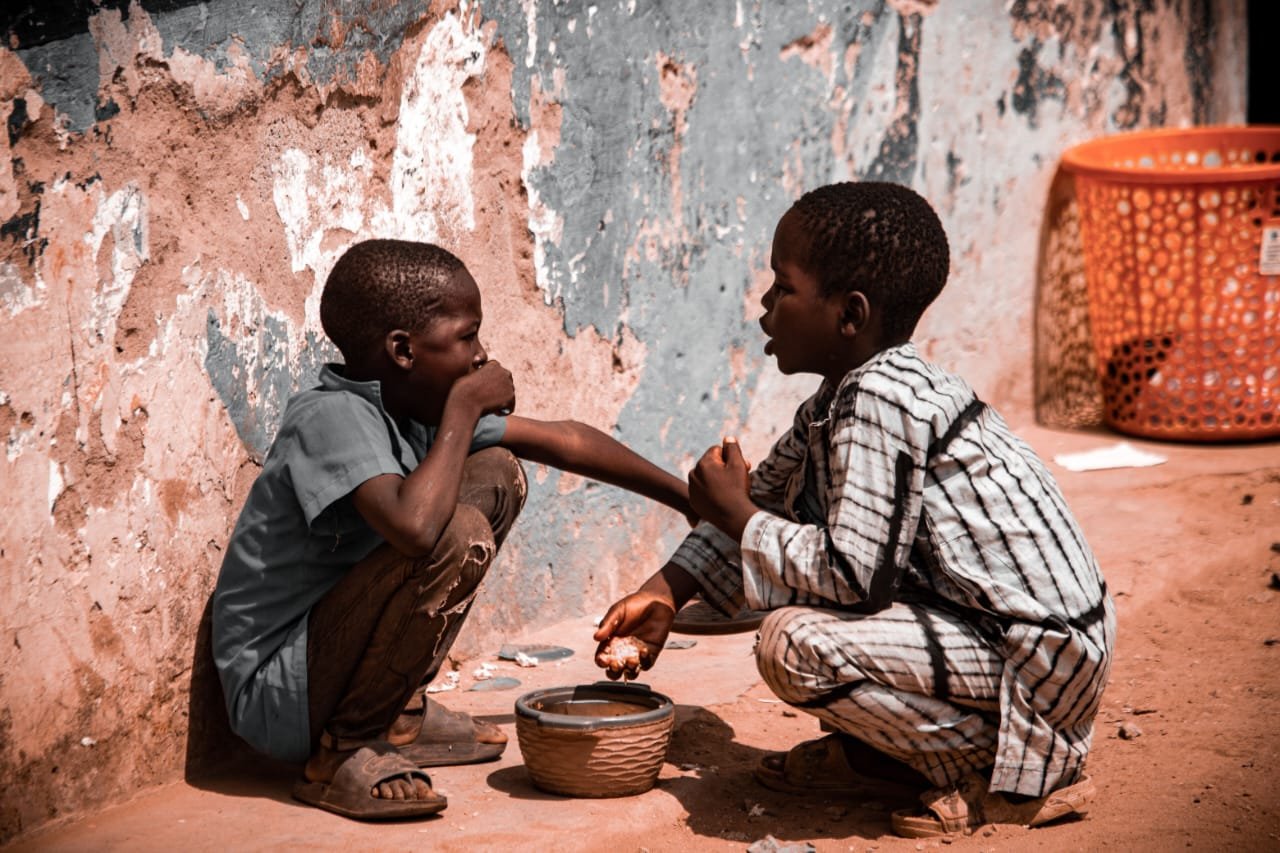
Meanwhile, wealthier countries are expected to keep over-consuming food despite public health campaigns promoting healthier eating, while low-income countries, especially in Sub-Saharan Africa, risk falling further behind on food security and nutrition. Low household incomes, limited money for imports, and high food losses across weak supply chains all combine to keep affordable, nutritious food out of reach for many. The report is clear that closing this gap requires both higher farm productivity and smoother, better-functioning trade.
This dietary shift feeds directly into livestock and feed markets. Growing herds and more intensive feeding practices are projected to drive a 13.5% rise in global feed protein consumption, with the biggest efficiency gains happening in lower middle-income countries as farms move away from small-scale, scrap-fed animals toward commercial operations. Agricultural commodities are also being used for more than just food and feed: global biofuel use is projected to keep growing at around 1.3% a year, led mainly by middle-income countries such as Brazil and India for ethanol and Indonesia for biodiesel, while a wider range of crops are increasingly channelled into bio-based materials, chemicals and other industrial products.
Trade and New Shock: The 2026 Middle East Crisis
International trade plays a critical role in balancing food supply and demand across regions, moving surplus grain, meat and other goods from where they are produced to where they are needed. Roughly 22-23% of global agricultural production is now traded internationally, up fromfrom about 16% in 2000, and this share is expected to hold broadly steady over the next decade. Latin America, powered by Brazil, Argentina and Paraguay, is set to remain the world's leading exporting region, while South and Southeast Asia have flipped from being net exporters to net importers as demand rises in countries like India, Indonesia and Viet Nam. Import dependence is projected to climb fastest in Sub-Saharan Africa (up 55% by 2035) and the Near East and North Africa (up 34%), regions where population growth is outpacing what local farms can produce. The Outlook stresses that continued co-operation between countries, and trade rules that everyone can rely on, are essential for stable food security, affordable diets, and steady farm incomes, especially for countries that cannot produce enough food on their own.
This year's report was finalised just as conflict broke out in the Middle East in early 2026, disrupting energy markets and, crucially, trade through the Strait of Hormuz, a vital corridor connecting Gulf energy producers to the rest of the world. To understand what this could mean, the report's authors ran a special 'adverse scenario' for 2026-2027, modelling what happens if global economic growth slows and energy and fertiliser prices stay elevated.
Chart 2: Projected extra price pressure on key foods under the adverse scenario, relative to the normal baseline
The results are sobering. Higher energy costs push up fertiliser prices by as much as 29% in 2026 and a further 17% in 2027, leading farmers everywhere to cut back on fertiliser use, though not equally. Low-income countries cut fertiliser use the most, by around 5.1% in 2026, compared with roughly 2% or less in high-income countries that can better absorb the extra cost. That gap in fertiliser use translates directly into food output: cereal production in low-income countries is projected to fall by about 2.3% in 2026 and 1.7% in 2027, versus less than 1% in high-income countries. Wealthier nations can also lean on stockpiles and trade to keep food supplies stable, but poorer nations face a tougher combination of higher prices, lower incomes, and less diverse, less nutritious diets, with knock-on effects for food stability and vulnerability to future shocks.
What this Means going Forward
The OECD-FAO Agricultural Outlook 2026-2035 paints a picture of a world food system that, on average, is heading in the right direction: incomes are set to rise, prices should stay reasonably stable, and diets in many developing regions are diversifying, but averages can be misleading. Beneath these positive headline numbers lie deep and persistent inequalities between rich and poor farmers, real risks from climate change and rising emissions, and a fresh reminder from the 2026 Middle East conflict that global food markets remain exposed to sudden shocks.
What ties all of these findings together is a single idea: productivity growth is the thread that keeps the whole system stable. It is what allows farmer incomes to rise even while prices stay flat, what keeps food affordable for consumers without needing more land and animals, and what determines how well countries can absorb shocks like the 2026 conflict without lasting damage to food security. Where that productivity growth is missing, whether due to under-investment, weak infrastructure, or limited access to modern farming tools, the gaps between regions widen rather than close. The report's central message, then, is not simply optimistic or pessimistic, but conditional: closing these gaps will require sustained investment in farm productivity, stronger rural infrastructure, and above all, continued international co-operation on trade, especially for the low-income countries that stand to lose the most if the world fails to act.