
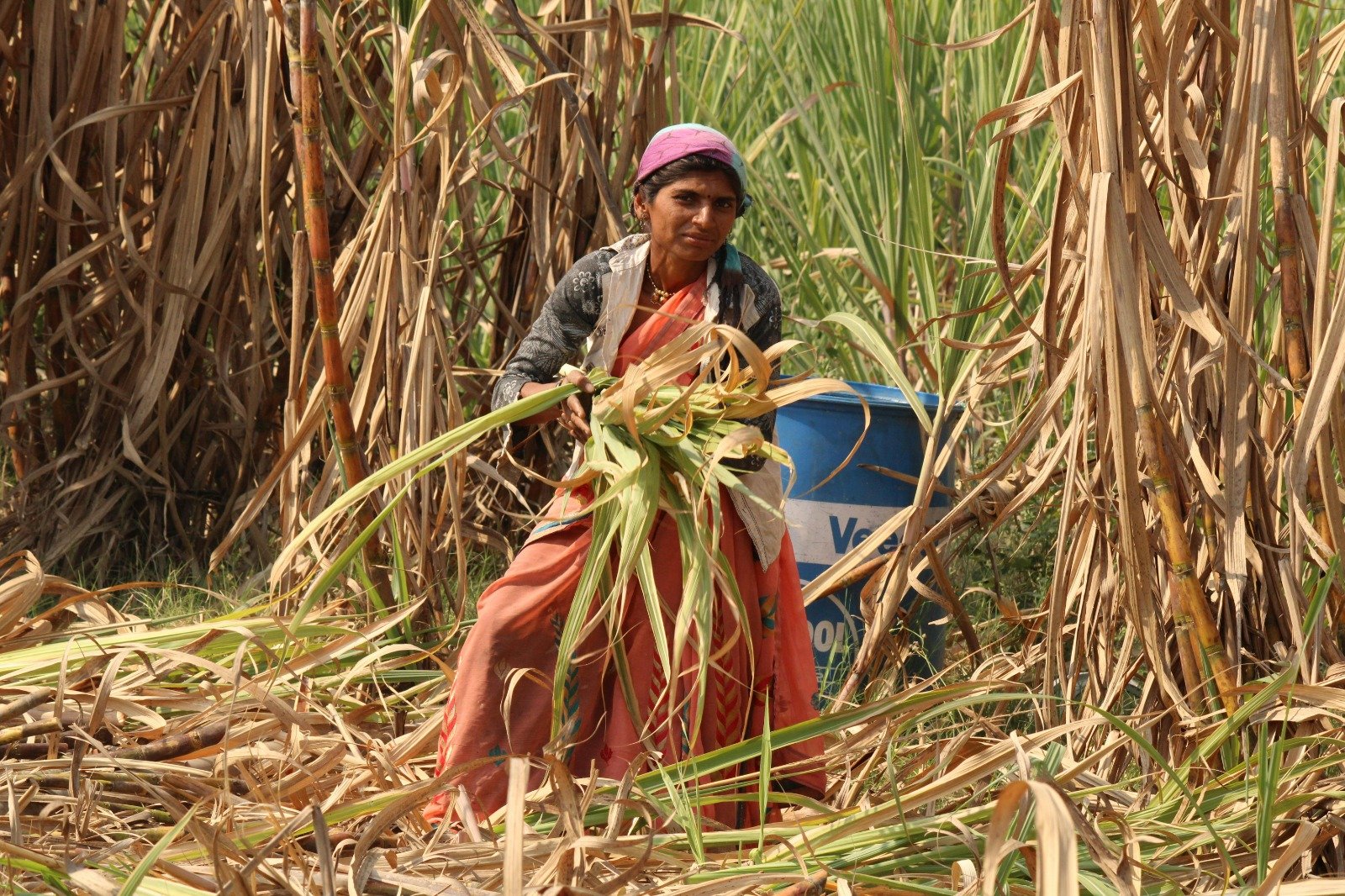
India has moved decisively to restrict Indian sugar from global markets. The Directorate General of Foreign Trade (DGFT), through Notification No. 16/2026-27 dated 13 May 2026, has escalated the export status of raw, white, and refined sugar from Restricted to Prohibited with immediate effect. The ban runs until 30 September 2026, or until further notice, whichever is earlier.
Issued under Section 3 read with Section 5 of the Foreign Trade (Development & Regulation) Act, 1992 and in exercise of the Foreign Trade Policy 2023, the notification covers all three principal forms of internationally traded sugar (raw, refined, and white) under Chapter 17 of the ITC (HS) Schedule II.
Export Policy Amendment at a Glance
|
ITC (HS) Code |
Description |
Previous Policy |
Revised Policy |
In Force Until |
|
1701 14 90 |
Raw Sugar |
Restricted |
PROHIBITED |
30 Sept 2026 |
|
1701 99 90 |
White Sugar & Refined Sugar |
Restricted |
PROHIBITED |
30 Sept 2026 |
The notification critically carries no transitional arrangement for this change. Para 1.05 of the Foreign Trade Policy 2023, which typically provides exporters a grace window to fulfil existing commitments has been explicitly excluded from application. This shows that this is a clean, immediate export cut, and not a phased withdrawal.
Permitted Export Channels
The blanket prohibition carves out access to the sugar trade to four categories, each addressing specific pre-existing obligations or treaty-bound commitments.
- Sugar exported to the EU and USA under CXL and TRQ quota arrangements, subject to prescribed Public Notice procedures.
- Sugar exported under the Advance Authorization Scheme (AAS), governed under FTP 2023 and the Handbook of Procedures 2023.
- Exports permitted by the Government of India to other countries on food security grounds, pursuant to government-to-government requests.
- Consignments already in the physical export pipeline where loading had commenced, the vessel had berthed with a port rotation number, or the consignment had been handed over to Customs before gazette notification.
The pipeline exemptions are tightly defined and are evidence-dependent. For vessels already berthed, port authority confirmation of anchorage prior to the notification date is required before loading approval is granted. Exporters claiming customs-handover status must produce verifiable electronic records. There is no administrative discretion built into these provisions, and only documentary proof will suffice.
Global Market Consequences
India is the world's largest sugar producer and consistently one of its top two exporters. Any shift in its export posture sends an immediate signal to ICE raw sugar futures, white sugar premiums in London, and procurement strategies across importing nations in Asia, the Middle East, and the African continent.
This prohibition is not only a domestic supply management measure in isolation but a pricing event for every major importing region. Countries that have depended on Indian raw and white sugar to buffer lean supply periods must now reallocate procurement to Brazil, Thailand, or Australia, all of which operate under their own seasonal and logistical constraints.
Mid-May through September represents the period when Northern Hemisphere sugar-producing nations are between campaigns and global spot availability tightens. India's withdrawal from export markets in precisely this inter-season window removes a buffer that bulk importers have embedded in their forward purchasing models.
White sugar differentials and the premium paid over raw sugar on the London No. 5 contract are likely to face upward pressure, particularly for origins with refined sugar shortfalls. Nations in the Gulf, Southeast Asia, and East Africa that have been contracting Indian white sugar under term agreements will need to either absorb higher procurement costs or accept logistical delays in switching origin.
For Brazil, which is currently the world's largest sugar exporter, the Indian prohibition may offer a short-term competitive advantage in origin-neutral tenders. However, Brazilian port logistics and crushing-season constraints limit how rapidly additional volume can be mobilized. Thailand, the other major exporter from Asia, is recovering from its own production variability and is unlikely to absorb Indian shortfall volumes at scale.
Trade Law Architecture and WTO Exposure
The notification's carve-out for EU and USA TRQ and CXL quota exports is significant from both a geopolitical and WTO compliance standpoint. India has preserved its treaty-bound quota obligations while restricting discretionary export volume as a formulation that minimizes formal trade dispute exposure while achieving domestic supply security objectives.
The measure's issuance coming through DGFT rather than a Ministry of Food and Public Distribution order under the Essential Commodities Act is equally deliberate. It keeps the intervention within the WTO's balance-of-payments and food security exception architecture, signalling that the government was acutely aware of international trade law constraints when designing the prohibition. The framing is trade law, not domestic price control.
Domestic Context
The notification's timing of mid-May, well before the October–November sugarcane crush season points to government concern over domestic availability heading into the lean inter-season period. India's sugar marketing year runs from October to September; carryover stock levels, ethanol diversion volumes, and monsoon-dependent cane projections are all likely informing the Ministry of Commerce's calculus.
The notification is signed by Lav Agarwal, Director General of Foreign Trade, with the approval of the Minister of Commerce and Industry, indicating this was not a routine administrative order but a ministerially sanctioned trade intervention.
Reversal Provision and Formal Outlook
The notification’s Para 6 is the key detail for market stakeholders which should be noted most carefully: it explicitly states that if the prohibition is not extended beyond 30 September, the policy reverts to ‘Restricted’ and not to free export. A deliberate design choice by the government that does not intend to return to open export windows without continued administrative oversight.
Considering this, exporters and buyers planning marketing year 2026-27 volumes should treat ‘Restricted’ as the baseline scenario. Any relaxation will require affirmative government action by a further notification, not the passage of time. The absence of a sunset back to free trade means the structural constraint on Indian sugar exports continues beyond September, regardless of what this notification says.

.jpeg)