
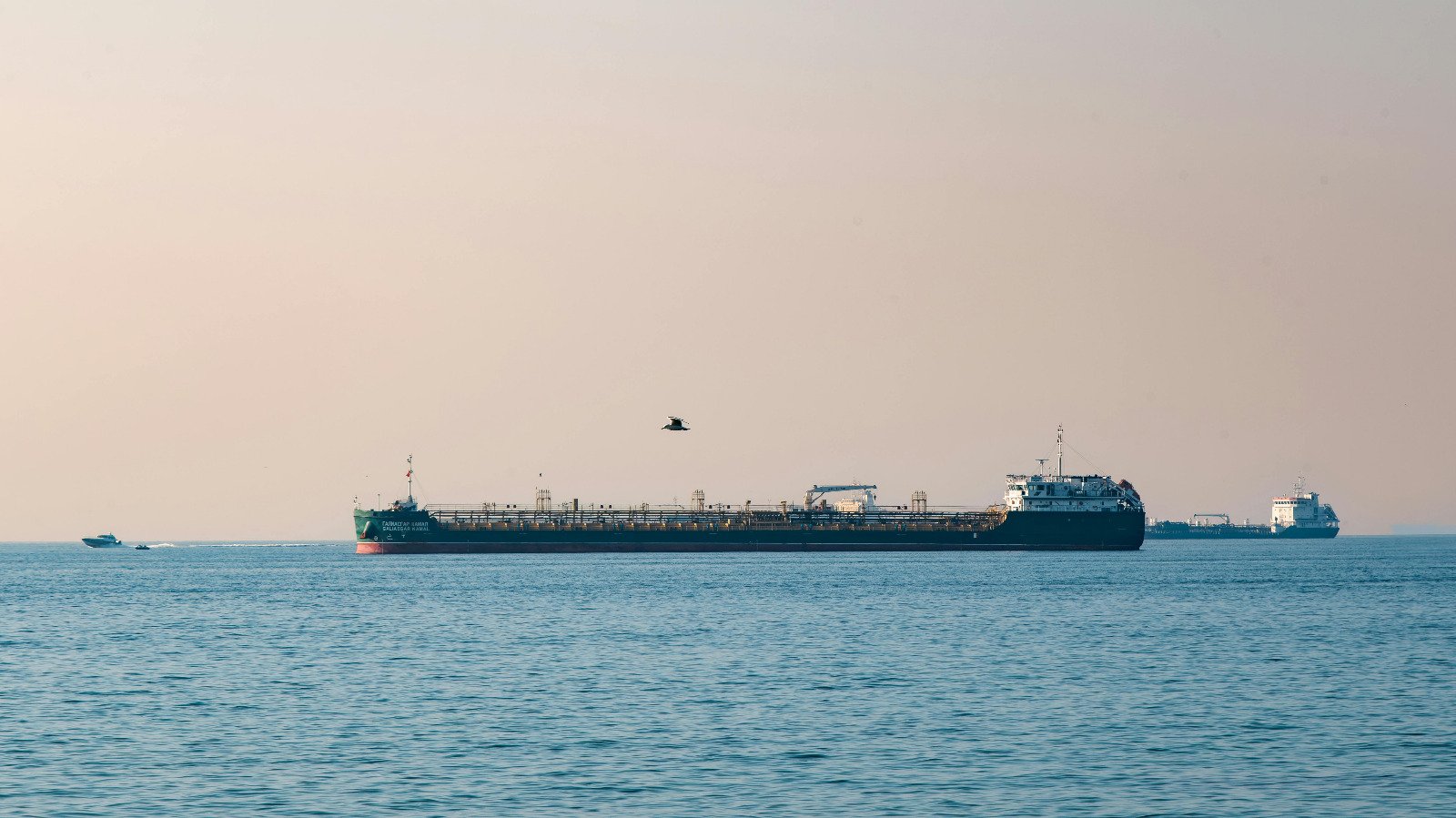
A "double-edged" geopolitical reality where India's quest for self-reliance is being confronted by foreign volatility has made 2026 a turning point for global agricultural supply chains. India has strengthened its domestic output, but the energy corridors that power the country's fertilizer facilities have been rocked by the abrupt development of war in West Asia.
The Global Shock and the Hormuz
Stranglehold:
The strategic blockade of the Strait of Hormuz, a tiny choke point that has
essentially turned into a localised “iron curtain,” lies at the heart of the
current situation. 35% of the world's urea and an astounding 80% of India's
ammonia imports come from this maritime chokepoint. According to recent maritime trade assessments, the
disruption has not only caused a physical shortage of raw material but has also
1.triggered a 40% surge in maritime insurance premiums, making
even the available shipments prohibitively expensive. This “energy-urea” link
means that any tremor in the Persian Gulf is felt immediately in the soil of
India's agricultural lands.
India is currently experiencing an odd “Domestic Paradox.”
As of March 2026, the Ministry of Chemicals and Fertilizers claimed record-high
domestic stockpiles of 180 LMT (lakh metric tonnes), a buffer designed to
withstand seasonal variations. However, based on the latest industrial output
reports from the Fertilizer Association of India (FAI), this “stock” safety is
deceptive. While the warehouses are full, the flow of production is under
immense pressure as domestic plants struggle with erratic LNG supplies. The
crisis highlights that while India has the capacity to store fertilizers, its
ability to produce them remains tethered to the global energy market that is
increasingly fragmented and hostile.
Production Under Stress: The Natural
Gas Squeeze
India's fertilizer manufacturing sector is currently
contending with a critical raw material supply crisis, resulting in a localized
output bottleneck driven by the global energy situation. The stability of
India's agricultural production is now intimately correlated with the
uninterrupted flow through its gas pipelines, given that urea production is a
gas-intensive process.
Natural gas is the most important raw material in India
since urea is produced almost entirely using gas. Due to the current shortage,
the government appears to have been compelled to implement "regulatory
triage." The government passed the Natural Gas (Supply Regulation) Order,
2026, to keep the agricultural sector from completely collapsing. In order to
ensure that these facilities receive adequate gas to maintain at least 70% of
their operational capacity, this mandate formally designated fertilizer factories
as Priority Sector-2, a calculated step. As highlighted in the 2.Ministry of Petroleum’s recent policy brief, this
prioritization is a defensive measure to ensure that domestic production
remains the primary source of supply, even as the cost of securing that gas on
the global spot market reaches historic highs.
The flow of manufacturing is far from seamless in spite of
these legal protections. LNG shipment delays from West Asian ports have caused
sporadic "cold starts" at some inland plants, making logistics a
significant bottleneck. A thorough sector analysis byestimates that in the first quarter of 2026, these
disruptions caused an 3industry-wide output loss of 10–15%.
Following China's tough new export restrictions, the cost of
secondary raw materials like sulphur, which is necessary for NPK (Nitrogen,
Phosphorus, and Potassium) and DAP (Di-ammonium Phosphate) fertilizers, has
increased, adding to this stress. This "domino effect" means that
even if a plant manages to acquire gas, the industry's profits and operational
continuity are being squeezed by the growing cost of minerals and delayed
logistics.
India’s Urea Market Snapshot (FY
2025-26 vs. FY 2024-25)
Despite the goal of self-sufficiency, West Asian natural gas
supply problems caused domestic production to decline in early 2026,
necessitating a sharp increase in imports.
|
Parameter |
FY 2024-25 (Actuals) |
FY 2025-26 (Estimated/Till March) |
% Change |
|
Domestic
Production |
306.67
LMT |
298.50
LMT (est.) |
-2.7% |
|
Import
Volume |
48.70
LMT |
89.30
LMT |
+83.3% |
|
Total
Consumption (Sales) |
345.86
LMT |
352.61
LMT |
+2.0% |
|
Urea
Subsidy Outgo |
Rs 1.26
lakh crore |
Rs. 1.68
lakh crores (revised) |
+33% |
|
Avg.
Global Price (per MT) |
~$450 |
~$720 |
+60% |
Note: LMT = Lakh Metric Tonnes. Data
synthesized from PIB, Argus Media, and Ministry of Chemicals & Fertilizers
reports (March 2026).
Strategic Pivot: Diversifying the
Import Basket
India has changed from a reactive purchasing paradigm to a
proactive, multi-aligned procurement strategy in reaction to the West Asian
crisis. This "strategic pivot" involves securing supply chains
through Long-Term Agreements (LTAs) and diversifying its basket of energy
partners to insulate national food security from the extreme price instability
of the global spot market.
The US-Saudi-Russian Nexus: Using Volume to Hedging: India
is shifting toward Long-Term Agreements (LTAs) with all-weather energy partners
in an effort to better protect itself from price shocks. The increased
cooperation with Russia, which now offers a steady supply of about 30 LMT of
completed fertilizers and urea intermediates, is a key component of this
approach. In addition, there has been a notable rise in the import of crude and
feedstock from the United States, which acts as a crucial buffer against supply
interruptions in the Middle East.
This diversification is not just about sourcing, but also about pricing
sovereignty, which enables India to negotiate fixed rates that 4avoid the 60% increase observed in the global spot market,
according to a recent trade analysis. India guarantees that certain of its West
Asian needs are legally shielded from the immediate instability of regional
conflict by incorporating Saudi Arabian supplies into these long-term
frameworks.
The
Logistic Alternative and the Iran Factor: Securing supply routes across the
Persian Gulf requires a careful diplomatic balancing act to hedge against
potential disruptions at the Strait of Hormuz. While continuing to receive
critical petroleum and urea shipments from Iran, the government is also
accelerating the use of the International North-South Transport Corridor
(INSTC), a move detailed in the most recent strategy brief from the Indian
Council of World Affairs (ICWA).
By avoiding the conventional, dangerous marine choke points,
this multi-modal route across Central Asia and the Caspian Sea provides a vital
backdoor for fertilizers from Russia and Central Asia. This dual-track strategy
is key to ensuring a durable import basket: it creates crucial redundancy by
utilizing the multi-modal INSTC to bypass the dangerous marine chokepoints,
while simultaneously maintaining existing, critical supply relationships with
Iran.
The Fiscal Burden: The Subsidy
"Shock Absorber"
The growing global crisis has made the Indian fertilizer
subsidy a huge fiscal "shock absorber," protecting the country's
agricultural economy from the harsh reality of price increases abroad. Although
this protection is essential for farmer welfare and national food security, it
puts an unprecedented amount of financial strain on the Union Budget.
The divergence between international market costs and
domestic retail prices has reached a breaking point in early 2026. Global urea
prices surged from $480 to $720 per tonne due to West Asian supply disruptions.
However, the Indian government has maintained a rigid ceiling on the Maximum
Retail Price (MRP) of ₹242 per 45kg bag to prevent rural inflation.According to the 5Fertilizer Association of India (FAI), the government now
absorbs nearly 90% of the cost of every imported bag. By covering this massive
price delta, the state ensures the geopolitical tax does not fall on farmers,
though it leaves the exchequer vulnerable to global market whims.
There is a huge "subsidy hole" in the national
accounts as a result of this enormous price absorption. The first allotments
for the 2026–2027 fertilizer budget are probably going to be insufficient, as
the Comptroller and Auditor General (CAG) noted in a study on commodities
subsidies. Given that the Revised Urea Subsidy Outgo already reached 1.68 Lakh
Cr and global prices surged by 60% (to $720 per MT), a significant mid-year
budgetary change may be required to cover the spiralling landed cost of
imports. This is further exacerbated by high freight and insurance rates. The
government may have to reallocate funding from long-term agricultural
infrastructure projects in order to satisfy the urgent need to keep fertilizers
affordable and available for the following planting seasons, which presents a
challenging trade-off.
The Path Forward: Nano-Urea and
Self-Reliance
The last frontier in India's pursuit of "Urea
Sovereignty" lies at the nexus of cutting-edge technology and industrial
rebirth. The emphasis has switched from simply ensuring imports to radically
re-engineering how India feeds its soil as traditional supply systems break
under the weight of geopolitics.
The widespread use of Nano-Urea and Nano-DAP is serving as a
vital buffer against the present shortage of supplies worldwide. These liquid
fertilizers have a far greater nutrient-use efficiency than conventional
granular urea because they deliver nutrients at a molecular level.The 6Press Information Bureau (PIB) reported in March 2026 that
the total sales of nano-fertilizers have exceeded 1,593 lakh bottles, and field
tests have shown that Nano-Urea can lower conventional consumption by 25–50%.
This technological advancement is a calculated bulk-reduction move rather than
merely being efficient. India is successfully lowering its logistical reliance
on the enormous maritime cargoes that are presently stuck in the Strait of
Hormuz by substituting 500ml bottles for 45 kg bags.
Atmanirbhar Progress Amidst Crisis: The ambition to end urea imports by 2027 remains the North Star of India’s agricultural policy, though the 2026 crisis has added new layers of complexity. Significant progress has been made through the revival of sick fertilizer units;7the Sindri and Barauni plants, alongside four other new units, have recently added a total of 76.2 Lakh Metric Tonnes to the national capacity. This expansion has brought total indigenous production to a record level of approximately 314 Lakh Metric Tonnes, as reported in the latest ministerial briefings.
The 8Department of Fertilizers' most recent sector updates, however, point out that although the physical infrastructure is prepared, the "operational timeline" is being threatened by the world's energy shortage. Whether India can stabilise its gas manufacturing components and raw materials through new corridors like the INSTC or whether the current instability in West Asia will require a temporary extension of import reliance to preserve the country's food security buffer will now determine the 2027 goalpost.