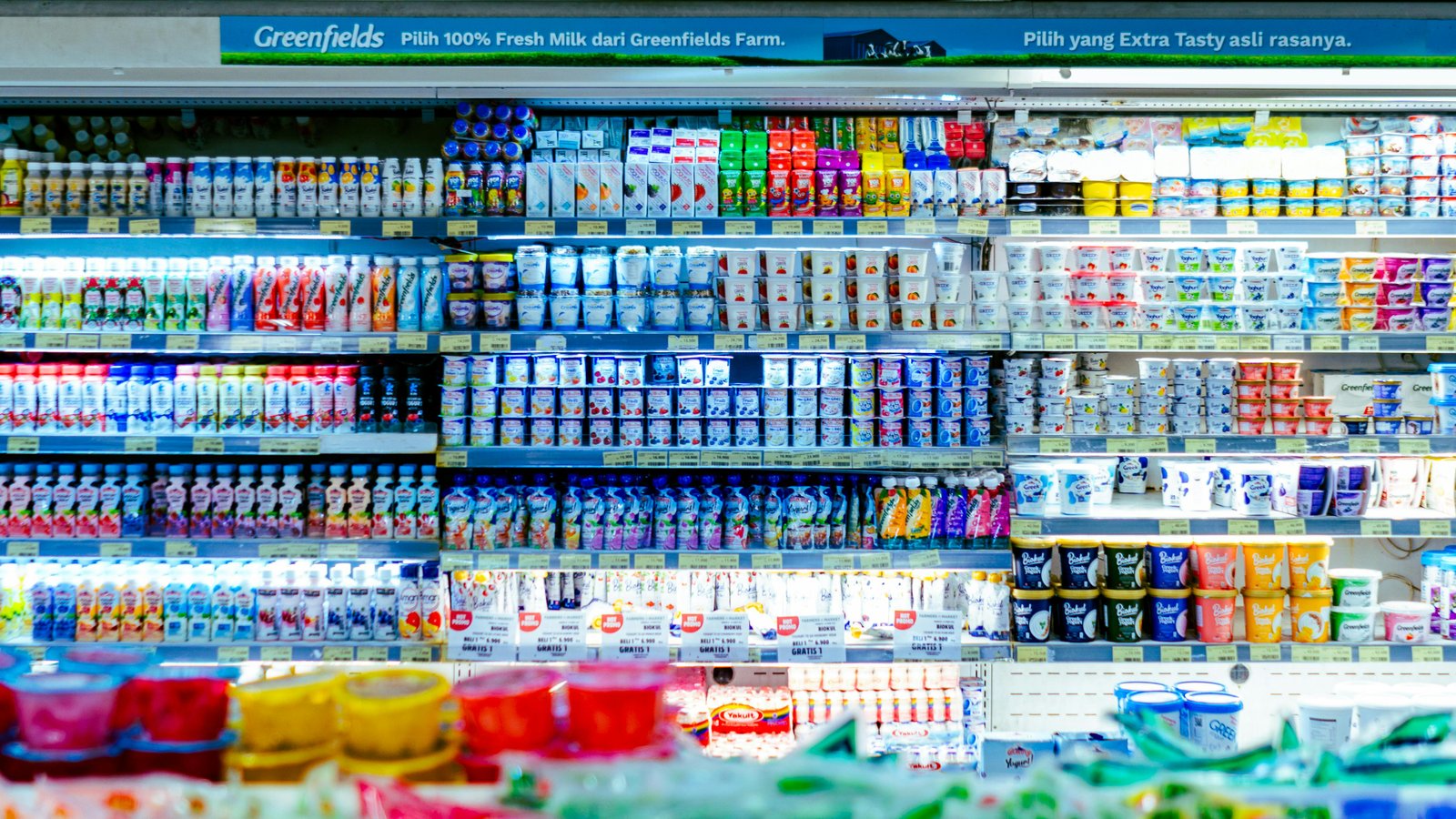
Within the crowded shelves of Indian grocery stores, informative, consumer-centric labels that prioritize compliance and clarity are fading, giving way to eye-catching wrappers boasting claims like 100% Natural, No Added Sugar, and Whole Grain. Most consumers view these as indicators of a healthy choice. Yet, behind the bold lettering and attractive pictures is a confusing reality of legal gaps, deceptive marketing tactics, and the hiding of essential nutritional facts. With India struggling against both poor nutrition and a rapid rise in lifestyle-related illnesses, the clarity of food packaging has evolved from a simple consumer concern into an urgent health crisis.
The Rise of the Health Halo
Within the evolving landscape of the Indian food sector, the “Health Halo” serves as a sophisticated psychological marketing tactic where a solitary healthy claim manipulates consumers into overestimating the holistic nutritional value of a product. This halo effect works like a saint’s glow, highlighting one good thing to distract from the unhealthy ingredients hidden in the fine print.
Such illusive practices are facilitated by the absence of a rigorous legal definition for purity within the FSS Act, 2006. 2.Additionally, the 2023 India Index by the Access to Nutrition Initiative (ATNI) indicated that 76% of sales generated by the nation's leading 20 food corporations are derived from less healthy offerings, even when accompanied by health-centric imagery. The persistence of misleading labels highlights a profound failure of connection between regulatory ambitions and industry practices. Marketing descriptors such as sugar-free or multigrain typically conceal ingredients like artificial sweeteners and refined flours, creating a false sense of healthfulness. This practice exacerbates India's growing crisis of lifestyle-related diseases. Without mandated front-of-pack warnings, attractive claims will continue to intentionally obscure crucial nutritional facts and consumer health realities.
Data at a Glance: The Health Gap
The data surrounding India’s nutritional landscape reveals a significant health gap between what is marketed as nutritious and what is actually sold. 3.Data analysis of 1,901 products from India's 20 largest food and beverage manufacturers shows the concerning reality of the processed food sector.
The analysis highlights three critical issues:
Profit via Poor Nutrition: As addressed by India Index, 2/3 of total sales are derived from less healthy products, specifically those scoring below a 3.5 out of 5 on the Health Star Rating (HSR) system. This indicates that the majority of Indian processed food products do not even meet the basic health thresholds.
HFSS Prevalence: It was discovered that 19 out of the 20 major companies derive the vast majority of their revenue from products categorized as High in Fat, Salt, or Sugar (HFSS). This demonstrates that for the biggest players in the Indian market, the health halo is a marketing layer atop a fundamentally unhealthy portfolio.
The Definition Deficit: There is currently no unified, legally mandated definition of what constitutes healthy food in India. This regulatory vacuum allows processing entities to set their own internal benchmarks, often ignoring international standards to claim health benefits that are scientifically tenuous.
The Affordability Paradox for Indian Consumers When Healthy Choices Cost More
In addition to regulatory and informational gaps, India’s food ecosystem is also shaped by the critical economic distortion of the affordability paradox. In today’s marketplace, healthier and nutritionally superior food options are hard to find and often priced significantly higher than ultra-processed, high fat, salt, and sugar (HFSS) alternatives. This inversion creates a structural barrier where the economically rational choice for a large segment of the population is also the nutritionally inferior one.
For a low-to mid-income consumer base that is price-sensitive and constitutes the majority of India’s population, particularly in urban lower- and middle-income households, purchasing decisions are not driven solely by awareness but by cost efficiency. Consequently, even when consumers are able to identify misleading claims or understand nutritional labels, the higher price point of genuinely healthy products limits their ability to act on that knowledge. This undermines the very premise of transparency-driven reforms.
This pricing imbalance is not incidental but is reinforced by economies of scale, aggressive marketing, and supply chain efficiencies that favour ultra-processed foods. Without policy interventions such as fiscal incentives for healthy foods, disincentives for HFSS products, or subsidies for nutrient-dense staples labelling reforms alone risk becoming insufficient. Bridging the information gap without addressing the affordability gap will continue to leave the average Indian consumer trapped between awareness and access.
This underscores the urgent need for a mandated standardized Front-of-Pack Labelling (FoPL) system. Without it, the health gap will continue to widen, as consumers remain unable to easily distinguish truly nutritious options from ultra-processed goods masquerading as wellness products.
The ICMR-NIN Critique: Hidden Sugars and Refined Realities
In May 2024, 4.the Indian Council of Medical Research (ICMR) and the National Institute of Nutrition (NIN) introduced a landmark series of dietary guidelines designed to decode the deceptive marketing maneuvers pervasive in the Indian processed food sector. This essential intervention scrutinizes how manufacturers leverage labelling ambiguities to obscure a product's genuine nutritional profile, fostering a refined reality that serves as a primary driver of the nation's escalating metabolic health crisis.
The analysis identified three problems embedded in the system:
The Hidden Sugar Trap: Offerings frequently marketed under Sugar-Free or No Added Sugar banners often represent a nutritional minefield. The ICMR-NIN report underscores that these products are commonly fortified with unhealthy fats, refined grains, or hidden sugars, including high-fructose corn syrup, maltodextrin, and molasses-ingredients that aggressively spike the glycemic index, rendering the label scientifically tenuous for diabetics.
Whole Grain Deception: The proliferation of multigrain and whole wheat descriptors typically functions as a decorative branding exercise. The guidelines reveal that many such items contain only a fractional amount of actual whole grains, while the primary component remains fiber-stripped refined flour (maida), utilizing earthy aesthetics to project a deceptive health halo.
Natural vs. Chemical Paradox: The term Natural remains one of the most loosely defined descriptors within the regulatory space. Manufacturers frequently exploit this by spotlighting a singular minimally processed ingredient within a formula that is otherwise heavily dependent on synthetic preservatives, artificial colorants, and emulsifiers.
By dismantling these refined realities, the ICMR-NIN dietary guidelines 2024 act as a critical instrument for consumer empowerment. The report contends that until transparency is legally mandated, descriptors like natural or healthy should be met with profound skepticism, as marketing ingenuity continues to outpace existing consumer protections.
Front-of-Package Labelling
The most critical flashpoint in the pursuit of transparency is the implementation of Front-of-Package Labelling (FoPL). Although the foundation of the FoPL has been laid down in 2014 by the Food Safety and Standards Authority of India (FSSAI), the implementation is still lost in the mist of regulatory delays and conflicting interests.
This delay in oversight is further exacerbated by a staggering lag in enforcement. FSSAItakes an average of one to two years to process a single complaint regarding a misleading advertisement.5. During this extended period of regulatory inertia, contested products remain prominently displayed on supermarket shelves, continuing to manipulate consumer behaviour and shape dietary habits under a deceptive health halo.
This regulatory gridlock serves as a shield for industry giants, allowing deceptive claims to persist long after they have been flagged. For the Indian consumer, the result is a marketplace where the burden of proof is shifted from the manufacturer to the individual. Until a mandatory, non-manipulable warning system—such as high-sugar or high-salt caution symbols—is adopted, the gap between regulatory intent and consumer safety will remain a widening chasm. The struggle over FoPL is not merely a policy dispute; it is a critical battle over who controls the narrative of the nation's nutrition.
Regulatory Hurdles and the FoPL Debate
The most significant bottleneck in India's nutritional reform remains the implementation of Front-of-Package Labelling (FoPL). While the Supreme Court of India recently (February 2026) expressed sharp dissatisfaction with the lethargic rollout of mandatory warning labels, the industry continues to lobby for the “Indian Nutrition Rating” (INR). 6. Critics argue that this star-based system is fundamentally flawed, and by allowing positive nutrients such as added fiber or protein to offset negative components like excessive sodium or sugar, the INR enables manufacturers to manipulate scores. Consequently, a product high in harmful ingredients can still achieve an average rating, effectively cloaking its true health impact under an illusive star-based system.
This policy stalemate is stalled by a staggering breakdown in enforcement. 7. Data presented to the Indian Parliament in March 2026 revealed a massive spike in consumer grievances, with over 7,705 complaints related to food safety and misleading claims registered in the 2024-25 period, a significant jump from 4,735 the previous year.
Despite the reported resolution of nearly 6,000 cases, health advocates warn that “resolved” often indicates mere administrative closure or a request for clarification rather than the removal of a misleading product or the imposition of a fine. 8.FSSAI taking a longer period in addressing the issue results in the contested products remaining prominently on supermarket shelves, continuing to influence consumer behavior and entrench unhealthy dietary habits under false pretenses. This lack of swift accountability grants manufacturers a free pass to prioritize profits over public health, leaving the average Indian consumer to navigate a marketplace where the labels are often designed to confuse rather than inform.
The Path Forward: From Information to Protection
To effectively bridge the nation's profound enforcement gap, India must look beyond incremental domestic reforms and examine proven international regulatory models that have successfully curbed misleading food marketing. In particular, countries that have shifted from voluntary compliance to mandatory, enforceable standards offer valuable lessons in protecting consumer interests and ensuring accountability. Against this backdrop, India can derive critical insights from Singapore’s Health Promotion Board (HPB) approach.
Singapore has decisively moved beyond the limitations of voluntary disclosures by mandating the Nutri-Grade system for beverages. This categorization ranging from A (healthiest) to D (unhealthiest) based on sugar and saturated fat thresholds possesses a critical enforcement edge: Grade D offerings are strictly prohibited from being advertised across all media platforms. 10. This rigorous approach serves as a global benchmark for dismantling deceptive marketing before it reaches the consumer.
Incorporating a similar Grade-Based Advertising Ban would dismantle the regulatory inertia currently defining India’s systemic delay in complaint processing. By automatically restricting the marketing of products that fail to meet objective nutritional thresholds, the health halo is neutralized before it can manipulate consumer behaviour. Furthermore, Singapore’s success is rooted in a unified, legally mandated definition of healthy, which prevents manufacturers from exploiting the current definitiondeficit to set scientifically tenuous internal benchmarks. For India, the path forward necessitates a transition from a reactive model to a preemptive one where unhealthy products are legally restricted from masquerading as wellness choices. Adopting such a standard would transform the Indian marketplace into a protected nutritional ecosystem, finally shifting the burden of safety from the individual to the industry.
Beyond Singapore, we can also see global evidence that further reinforces the case for decisive regulatory intervention. Chile has emerged as a gold standard by implementing mandatory front-of-pack warning labels in the form of black stop-sign symbols for products high in sugar, salt, or fat and has implemented strict bans on advertising such products to children. This approach has directly targeted consumer perception and has demonstrated measurable reductions in the consumption of unhealthy foods. Similarly, the United Kingdom has adopted a more hybrid model, combining the use of traffic-light labelling with restrictions on the promotion and placement of High Fat, Salt, and Sugar (HFSS) products in retail environments. Together, these frameworks illustrate that effective food regulation must move beyond passive information disclosure toward actively shaping consumer environments and limiting exposure to unhealthy choices.
For India to effectively curb its escalating Non-Communicable Disease (NCD) crisis, where a staggering 11.4% of the population is now living with diabetes, food labelling must undergo a fundamental shift from being merely informative to actively protective. A critical analysis of the current landscape suggests that existing regulations are largely reactive, failing to keep pace with the sophisticated marketing tactics used by the processed food industry.
The solution lies in adopting a proactive, non-negotiable transparency model. Furthermore, the regulatory body must strictly codify definitions for ambiguous terms like “natural,” “fresh,” and “healthy” to prevent their use as health halos. Without these definitive guardrails and a shift away from industry-friendly star ratings, the Indian consumer remains an unwitting participant in a high-stakes nutritional guessing game. The transition to mandatory warning labels is not just a policy change; it is a necessary intervention to safeguard the long-term metabolic health of the nation.
.jpeg)