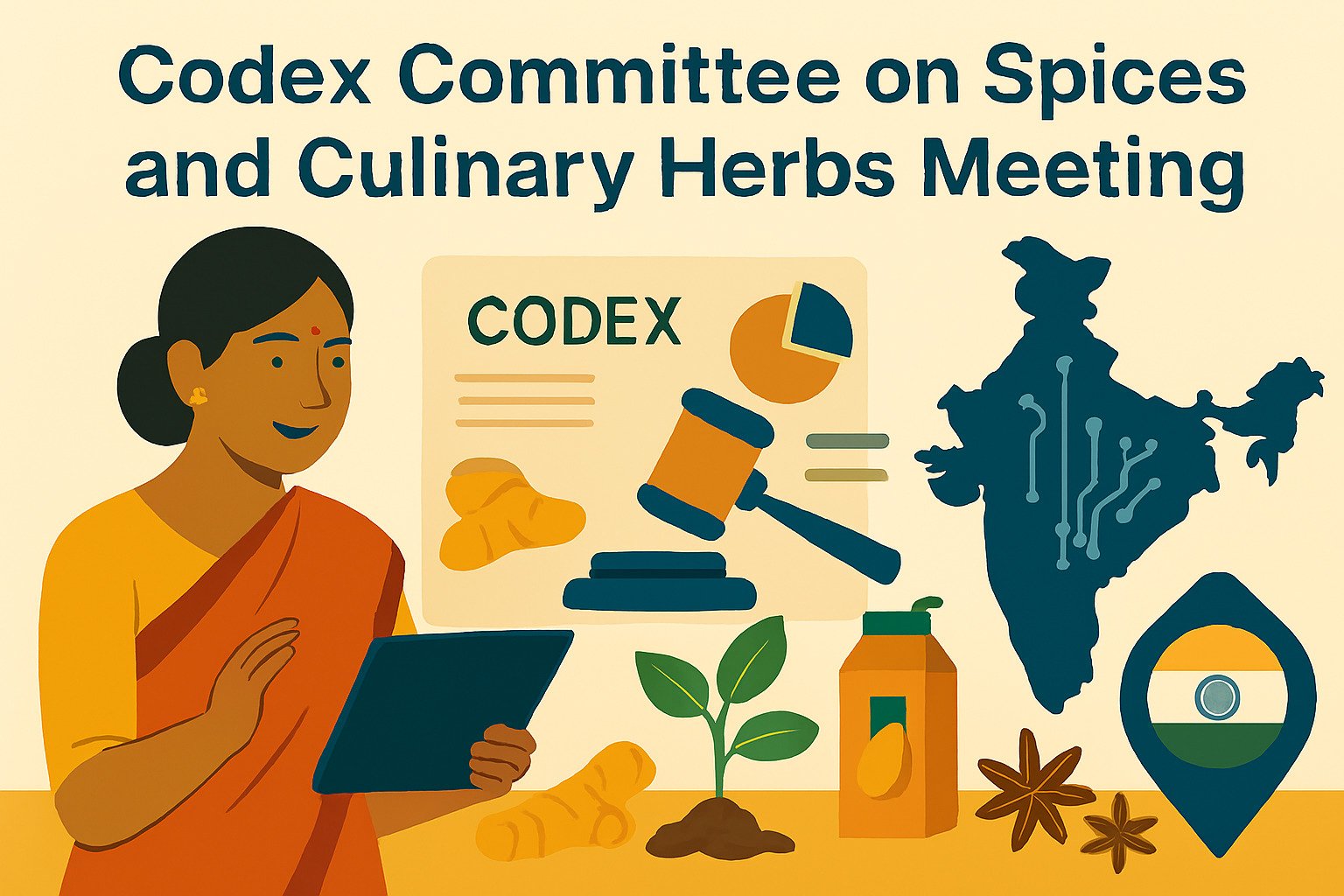
The 8th Session of the Codex Committee on Spices and Culinary Herbs (CCSCH-8) was convened in Guwahati, Assam, from 13–17 October 2025, with participation from over 40 countries. The meeting marked another milestone for India, a land historically synonymous with spices, which has been hosting Codex sessions on spices and culinary herbs since 2015.
The 8th Session of the Codex Committee on Spices and Culinary Herbs (CCSCH-8) was convened in Guwahati, Assam, from 13–17 October 2025, with participation from over 40 countries. The meeting marked another milestone for India, a land historically synonymous with spices, which has been hosting Codex sessions on spices and culinary herbs since 2015.
About Codex Alimentarius
Codex Alimentarius Commission is the international body jointly established by FAO and WHO in May 1963, with its first meeting held in Rome, Italy. The Codex Alimentarius is principally concerned with the task of protecting consumer health and ensuring fair practices in the food trade.
The Codex Committee on Spices and Culinary Herbs (CCSCH) is a sub-division of the commodity committees division and ensures the fair trade of quality ground and whole dried spices and culinary herbs through the following terms of reference:
- To elaborate worldwide standards for spices and culinary herbs in their dried and dehydrated state in whole, ground, and cracked or crushed form.
- To consult, as necessary, with other international organisations in the development process to avoid duplication.
As part of the Codex Alimentarius framework, CCSCH-8 deliberated extensively on setting internationally balanced quality and safety standards aimed towards protecting consumer health while facilitating fair trade in spices and culinary herbs. During the session, member countries discussed and progressed on global standards for the following Codex-listed products:
- Draft standard for spices derived from dried or dehydrated fruits and berries – Vanilla (Vanilla planifolia)
- Standard for spices in the form of dried fruits and berries – Large cardamom (Amomum subulatum)
- Standard for spices in the form of dried seeds – Coriander (Coriandrum sativum)
- Standard for herbs – Sweet marjoram (Origanum marjorana)
- Draft standard for spices in the form of dried bark – Cinnamon (Cinnamomum verum)
The discussions particularly focused on defining key quality parameters such as purity, safety, and compositional requirements to promote international trade while ensuring consumer protection. These standards are particularly significant for exporting countries, as Codex benchmarks are often referenced by importing nations in their regulatory frameworks.
India’s Strategic Advantage as Host and Standard-Setter
India’s role as both a Codex member country and the host of the Codex Committee on Spices and Culinary Herbs brings multifaceted benefits to its domestic spice sector. Hosting CCSCH sessions positions India not merely as a participant, but as an agenda-shaper in the global spice trade, enabling it to influence standards that directly affect its export competitiveness.
This leadership role is reflected in India’s export performance. The spice sector contributes approximately 19% of India’s total agricultural exports and over 40% of horticultural exports. With exports spanning more than 200 countries and comprising over 225 unique spice products, India continues to retain its position as the world’s leading spice exporter. In FY 2024–25, India’s spice exports reached USD 4.45 billion, with export volumes increasing by 88% and export value by 97% between 2013–14 and 2024–25, underscoring India’s growing dominance in global spice trade.
Standardisation as a Catalyst for Value Addition
The standardisation of quality parameters for Codex listed spices and culinary herbs presents a critical opportunity to streamline and enhance India’s trade promotion efforts. Once integrated into domestic regulatory mandates, Codex standards can improve market access for Indian spices by ensuring consistency, traceability, and global acceptability.
The CCSCH standards cover both whole and ground spices, opening new avenues for India to expand its footprint in the processed spice segment. The availability of internationally recognised benchmarks for processed spices will allow Indian exporters to certify their products as compliant with global norms, thereby improving competitiveness in high-value markets.
However, realising this potential will require restructuring existing Standard Operating Procedures (SOPs) across processing units and investing in modern, quality-compliant infrastructure. Such upgrades would significantly enhance value addition, enabling exports of ground and processed spices to fetch higher foreign exchange returns compared to raw produce.
Beyond compliance, India’s spice industry can further strengthen its global positioning through strategic branding initiatives. Approaches such as single-origin packaging, Geographical Indication (GI) tagging, and clear quality-compliant labelling aligned with Codex standards can help differentiate Indian spices in competitive international markets. These strategies not only enhance consumer trust but also allow premium pricing for both whole and value-added spice products.
Opportunity and Way Forward
As CCSCH also sets standards for culinary herbs, India has an opportunity to diversify beyond traditional spice exports. Indigenous herbs such as curry leaves(Murraya koenigii) and kasuri methi(Trigonella corniculata) possess strong culinary and medicinal relevance. By systematically documenting quality parameters and proposing these herbs for codex standardisation, India can proactively shape future global markets for native culinary herbs.
Furthermore, the Indian spice industry needs to redirect their cultivation patterns to better utilise regional agroclimatic conditions to obtain the best out of any spice variety. For example, Lakadong turmeric grown in the northeast region, especially in Meghalaya, produces rhizomes having exceptionally high curcumin content. This high curcumin content turmeric can be channelized into a high-end or premium quality product with the support of the recently established National Turmeric Board, which can help farmers with better branding and market positioning of the product.
The successful conclusion of CCSCH-8 in Guwahati reinforces India’s emergence as a global leader in spice governance, not just production. By aligning domestic systems with Codex standards, investing in value addition, and leveraging branding and origin-based strategies, India can transform its spice sector from a volume-driven exporter to a high-value, standards-led global powerhouse.

.jpeg)